Dryer Taking Too Long to Dry? Check the Vent Before the Dryer
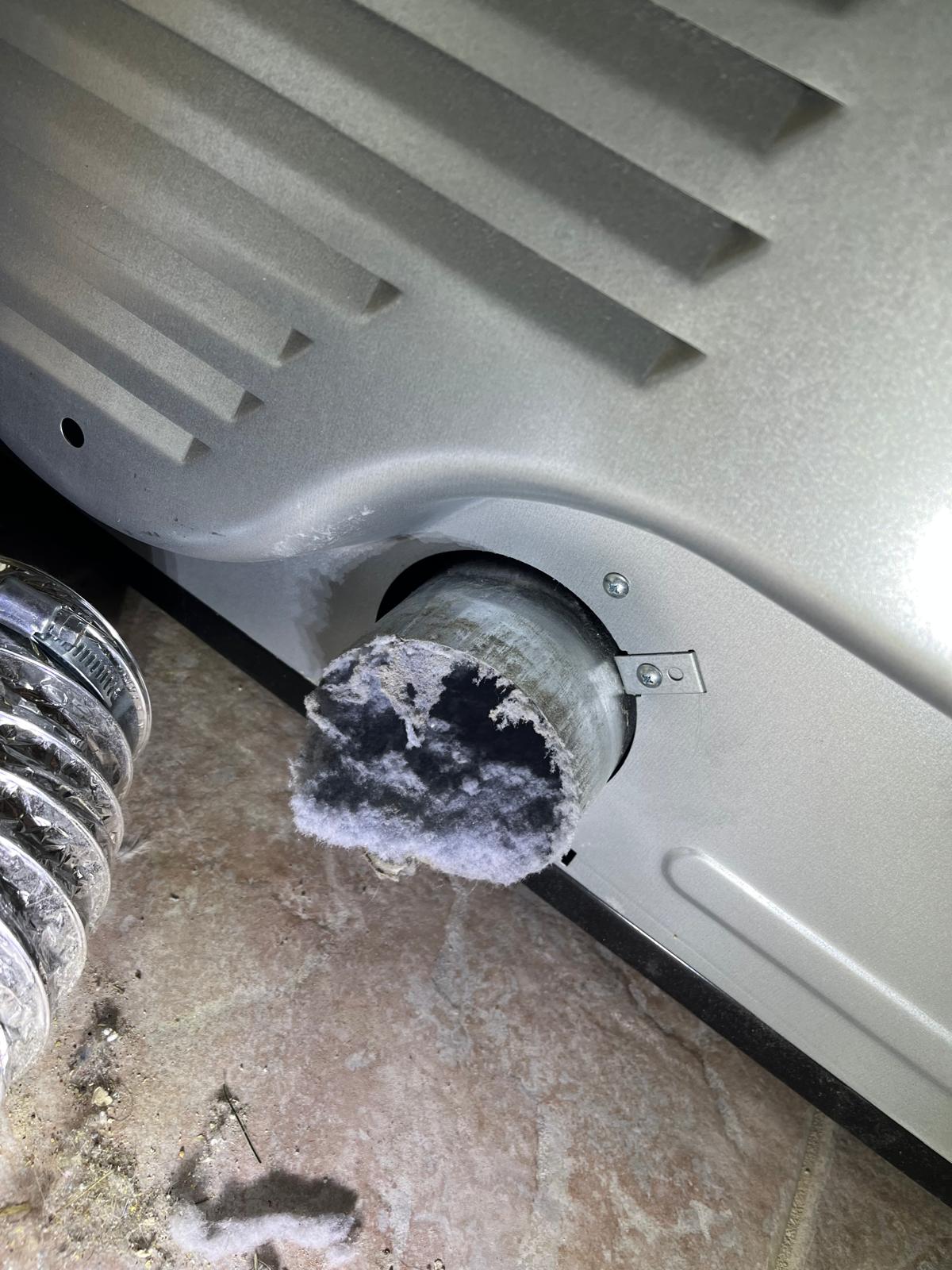
If your dryer suddenly needs two cycles, check the vent before you book a dryer repair. The U.S. Consumer Product Safety Commission notes that clothes still damp at the end of a typical cycle, or drying that takes longer than normal, “may be a sign that the lint screen or the exhaust duct is blocked.” The check takes minutes.
If the vent turns out to be clear, your next call is an appliance technician, not us.
Why does a blocked vent make a dryer take longer?
A dryer heats air, tumbles the clothes through it, and pushes the humid air outside through the vent. When lint narrows the vent, the wet air cannot leave fast enough, so the drum keeps circulating warm, damp air. The cycle ends, the load is still damp, and you run it again.
A restricted vent also traps heat. Modern dryers have a high-limit thermostat that trips when the inside gets too hot, so a badly clogged vent can make a dryer cut out partway through a cycle. That looks like a broken dryer, but the machine may simply be protecting itself.
On the Treasure Coast, clothes take longer to dry in humid air, and when the laundry sits in an unconditioned garage, lint gets damp and packs into the elbows instead of blowing clear.
Which vent problems slow a dryer down?
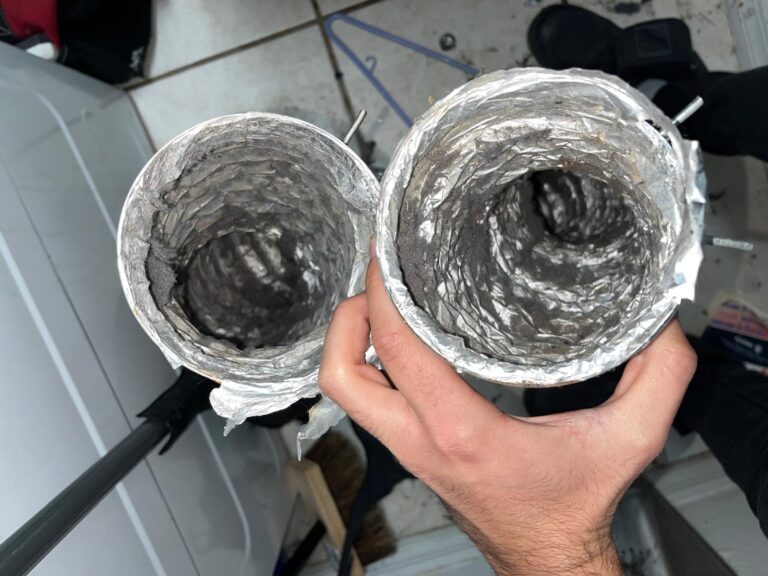
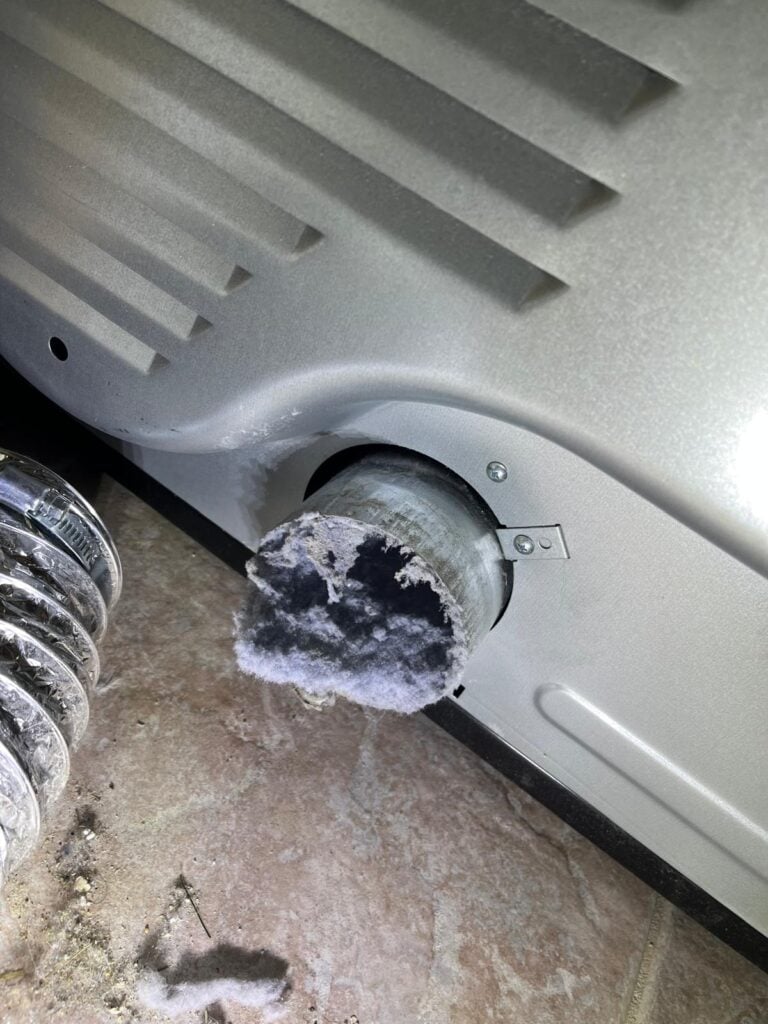
In the homes we work in, the usual culprits are a lint screen coated with residue, a crushed transition duct behind the dryer, lint packed along the run, and a blocked or stuck exterior hood. Long runs and roof exits make every one of these worse.
- A coated lint screen. ENERGY STAR notes that dryer sheets “can leave a film on the filter that reduces air flow.” If water beads on the screen instead of running through, scrub it with warm soapy water and a soft brush.
- A crushed or plastic transition duct. According to the CPSC, “The flexible plastic or foil type duct can more easily trap lint and is more susceptible to kinks or crushing, which can greatly reduce the airflow.”
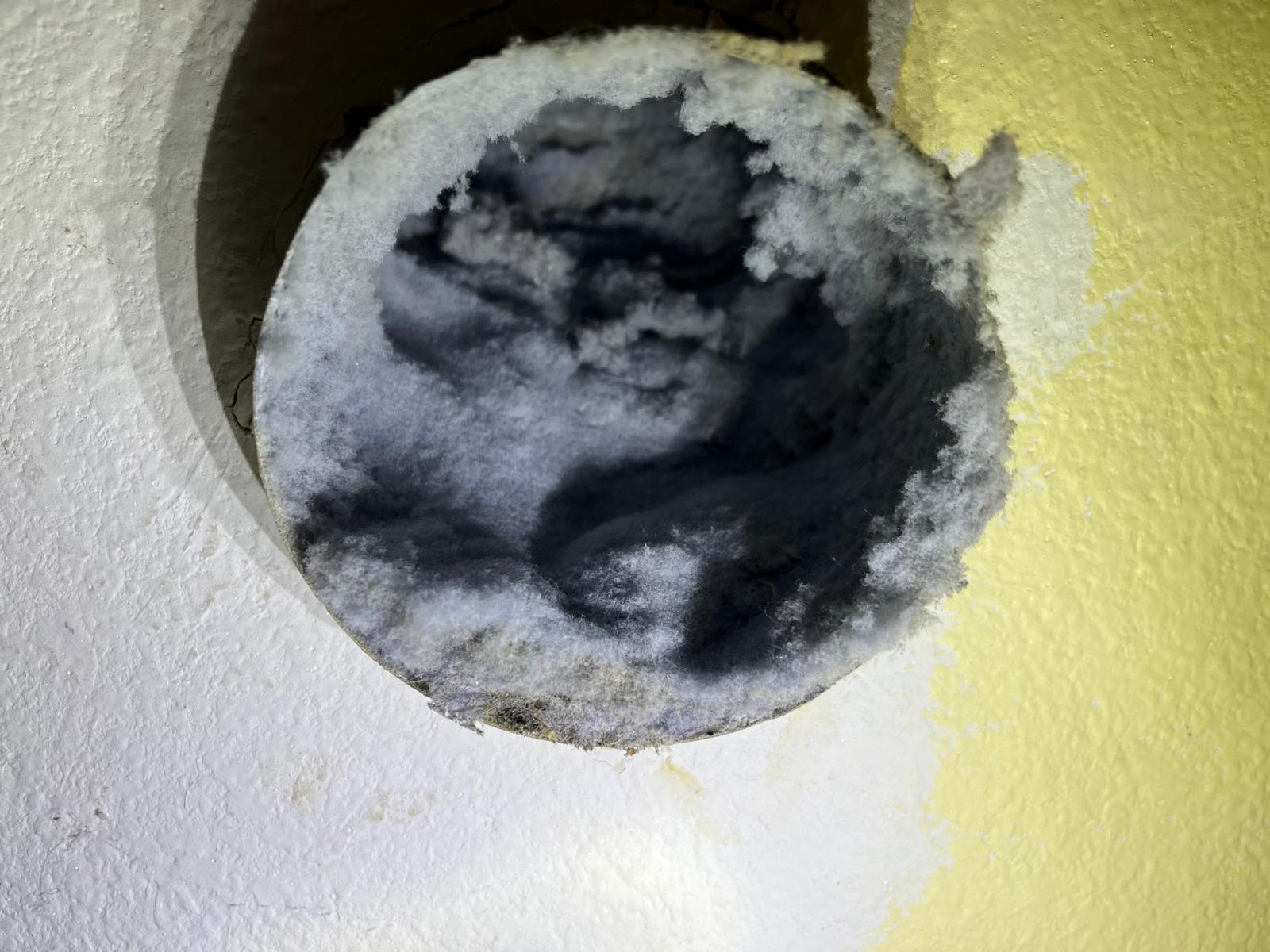
- Lint packed along the run. Lint that gets past the screen travels into the vent and packs into every turn.
- A long run or a roof exit. More feet and more elbows mean slower air and more lint left behind. Our guide to rooftop dryer vent cleaning covers why roof runs clog first.
- The exterior hood. Salt air corrodes the hood and its flap until it sticks, birds and wasps nest behind it, and a mesh screen or pest guard fitted over it catches lint and clogs.
How can you tell if it is the vent or the dryer?
Go outside while the dryer runs on a heated cycle and look at the vent hood. The CPSC advises checking the outside dryer vent while the dryer is operating “to make sure exhaust air is escaping. If it is not, the vent or the exhaust duct may be blocked.” Strong, warm, steady air with the flap fully open means the run is open.
- Clean the lint screen first, so a clogged screen does not muddy the result.
- Run a normal timed cycle on high heat with a couple of wet towels inside.
- At the hood, you want warm, forceful air you can feel a foot away, with the flap held fully open. On a roof exit, rely on steps 4 and 5.
- Look behind the dryer with a flashlight. If you ease it out, go gently, and on a gas dryer do not pull on or kink the gas line. A flattened foil hose or lint on the floor points to the transition duct.
- With an electric dryer only, our clogged vent guide describes a short disconnect test that separates the duct from the machine. Never run a gas dryer disconnected from its vent, because the vent carries combustion byproducts out of the house, and leave the gas line and its connection to a qualified gas appliance professional.
| What you find | What it points to | Who to call |
|---|---|---|
| Weak or no air at the hood, flap barely lifts | A restriction in the vent line or hood | Dryer vent cleaning |
| Lint clumps on the hood or the wall around it | The line behind the hood is restricted | Dryer vent cleaning |
| Twigs, feathers or chirping near the vent | A nest in the line | Dryer vent cleaning; do not brush it yourself |
| A mesh screen or pest guard over the hood | The screen is catching lint | Take the screen off (have it removed on a roof cap); clean the line if airflow stays weak |
| Strong, warm air and the flap fully open, loads still slow | Probably not the vent | Check load size and settings, then an appliance technician |
Weak air at the hood? Treasure Coast homeowners can call or text 772-577-2765, or see what a visit covers on our dryer vent cleaning in Port St. Lucie page.
What else slows a dryer that is not the vent or a broken part?
Load size, mostly. ENERGY STAR explains that drying too large a load makes it take longer, and that smaller loads can also take longer because they miss the tumbling effect of a full load. The NFPA’s clothes dryer safety tips also say not to overload your dryer.
Also check the cycle and heat settings against your manual. And if you have a heat pump dryer, ENERGY STAR notes that it does not release air outside, so there is no dryer vent and the vent checks above do not apply.
Which dryer problems need an appliance technician?
If the hood airflow is strong and the load size and settings are normal, the slow drying is most likely coming from the machine, a job for an appliance repair technician. We clean vents; we do not repair dryers. Parts and checks a technician deals with include:
- The heat source: the heating element on an electric dryer, or the burner side of a gas dryer.
- The temperature controls, including the high-limit thermostat that trips when the dryer runs too hot.
- The sensor that decides when an automatic cycle is done. ENERGY STAR describes these sensors as detecting when clothes are dry and ending the cycle.
- Lint built up inside the dryer cabinet. The CPSC advises having “a qualified service person clean the interior of the dryer chassis periodically.”
- On a gas dryer, the gas line and connection, which NFPA says should be inspected by a qualified professional to make sure they are intact and free of leaks.
When should you stop using the dryer?
Stop, unplug it, and leave it off if you smell burning, if the outside of the dryer is too hot to keep your hand on, or if it keeps shutting itself off mid-cycle. Those are heat buildup symptoms, not inconveniences. Do not run it again until the vent has been cleared and, if needed, the machine checked. Our guide to cleaning a dryer vent yourself covers which vents are safe to tackle at home.
How can I make my dryer dry faster?
Keep the air moving. Clean the lint screen before or after every load, scrub it when dryer sheets leave a film, dry full but not overstuffed loads, and keep the vent clear. The NFPA adds that rigid or flexible metal venting material should be used “to sustain proper air flow and drying time,” and that the outdoor vent flap should open when the dryer runs.
For the vent, NFPA says once a year, or more often if drying starts taking longer than normal. Our guide to how often to clean a dryer vent sets the schedule by household.
What does SunDuct do about a slow dryer?
We check the vent first, and if it was not the problem, we tell you, so your next call is an appliance technician. On the Treasure Coast we inspect the full run and test airflow, brush and vacuum the whole line, transition duct included, and clear the wall hood or, up on the roof, the cap. A crushed or plastic transition duct gets photographed so you or an appliance installer can replace it, and airflow is re-checked with a manometer, with before and after photos.
A dryer vent on its own is quoted. Booked with an air duct cleaning, the two come to $129 for a single family home of about 2,500 square feet with up to 10 vents; air duct cleaning alone starts from $99 for that size of home. Every price is confirmed in writing before work starts. Our dryer vent cleaning cost guide has the detail.
Thank you! Your request is in.
We received your details and will call or text you the same day to confirm your appointment.
Need us right now? Call 772-577-2765
Slow dryer questions
Can a clogged dryer vent cause clothes not to dry?
Yes. When lint narrows the vent, the humid air the dryer is trying to push outside stays in the drum, so clothes come out damp at the end of a normal cycle. The CPSC lists damp clothing after a typical cycle, and longer drying times than normal, as possible signs that the lint screen or the exhaust duct is blocked. Check the hood airflow first.
Will cleaning the vent fix a dryer that makes no heat at all?
Not on its own, usually. A badly restricted vent makes the dryer run hot, the high-limit thermostat keeps tripping, and over time the heating element can fail. Clearing the vent removes that cause, but a part that has already failed needs an appliance technician. If the vent is clear and the dryer still makes no heat, call a technician rather than a vent cleaner.
Do dryers take longer to dry in Florida?
They tend to. In our experience, loads take longer to dry in Florida humidity, especially when the dryer sits in an unconditioned garage, so a Florida dryer runs more cycles and more minutes than the same machine in a dry climate. More run time moves more lint through the vent, so the vent fills sooner.
Is it safe to keep using a dryer that needs two cycles?
Treat it as a warning, not an emergency, and get the vent checked soon. Two cycles usually means restricted airflow, and restricted airflow means more heat in the dryer and more lint in the line. If you also smell burning, the dryer is very hot to the touch, or it shuts off mid-cycle, stop using it until the vent is cleared.
Rule out the vent first. Treasure Coast homeowners can call or text 772-577-2765 for a flat price confirmed in writing before work starts. In Frisco and the nearby North Texas towns we serve, call our Frisco office at 469-405-6353, open daily 9 AM to 5 PM.