Rooftop Dryer Vent Cleaning: Why Roof Vents Clog and How They Get Cleaned
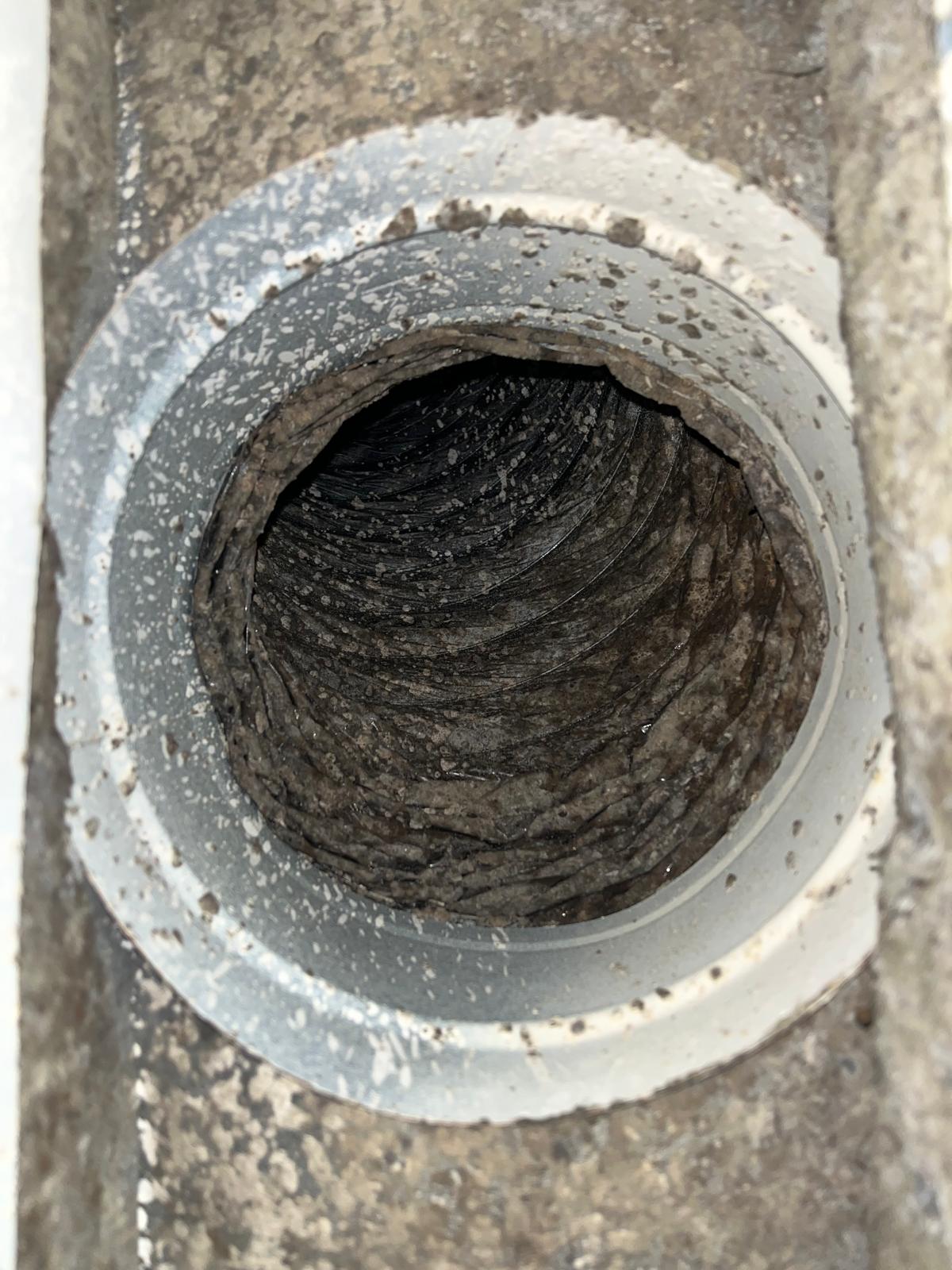
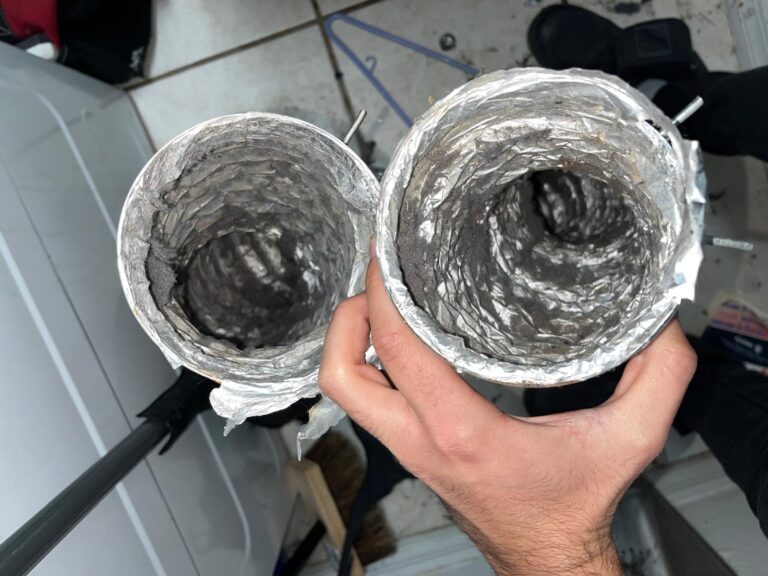
A rooftop dryer vent clogs faster than a wall vent because the lint has to travel farther and climb. The run is longer, it turns through more elbows, and the cap sits where nobody looks. Cleaning one properly means clearing the whole line from the dryer to the roof cap, not just the few feet behind the machine.
Roof exits are common on Treasure Coast homes, and they are the runs we most often find matted shut. Here is why, what to watch for, and what a full cleaning covers and costs.
Why do roof dryer vents clog faster than wall vents?
Because the air has farther to go and more turns to make. When the laundry is in the middle of the house, the vent usually climbs into the attic and exits through the roof. Each extra foot and each elbow slows the exhaust, and slower air drops more of its lint inside the duct instead of carrying it out.
- Length and elbows. A 2012 U.S. Fire Administration report on clothes dryer fires puts it plainly: “If a dryer vent is too long or has many bends and turns, moisture in the warm air passing through it condenses on the vent surfaces, attracting lint.”
- The climb. A roof run usually has a vertical section, and lint that loses speed on the way up settles there instead of reaching the cap.
- Florida humidity. Damp exhaust meeting an already humid duct leaves felted lint that clings to the duct walls.
- Nobody checks it. A roof run cannot be reached from the laundry room and the cap is out of view, so it tends to go years untouched.
| Wall exit | Roof exit | |
|---|---|---|
| Typical layout | Laundry in the garage or on an outside wall, short run out the side | Laundry mid-house, run up through the attic and out the roof |
| What you can check yourself | The hood and flap, from the ground, while the dryer runs | Very little: the run is in the attic and the cap is on the roof |
| Do it yourself? | Often realistic on a short, straight run | Call a pro |
| Price | Usually the simpler job | Often a little more; long runs get a flat written quote first |

What are the signs a roof dryer vent is blocked?
The same signs as any clogged vent, except you cannot walk outside and watch the hood, so the warnings come from inside the house. The NFPA’s clothes dryer safety tips say to clean lint out of the vent pipe once a year, “or more often if you notice that it is taking longer than normal for your clothes to dry.”
- A normal load needs a second cycle. Our guide to a dryer taking too long to dry walks through the vent checks first.
- The outside of the dryer is hot to the touch, or the dryer shuts off partway through a cycle.
- A burning smell while it runs. Stop the dryer, unplug it, and do not use it until the line has been cleared.
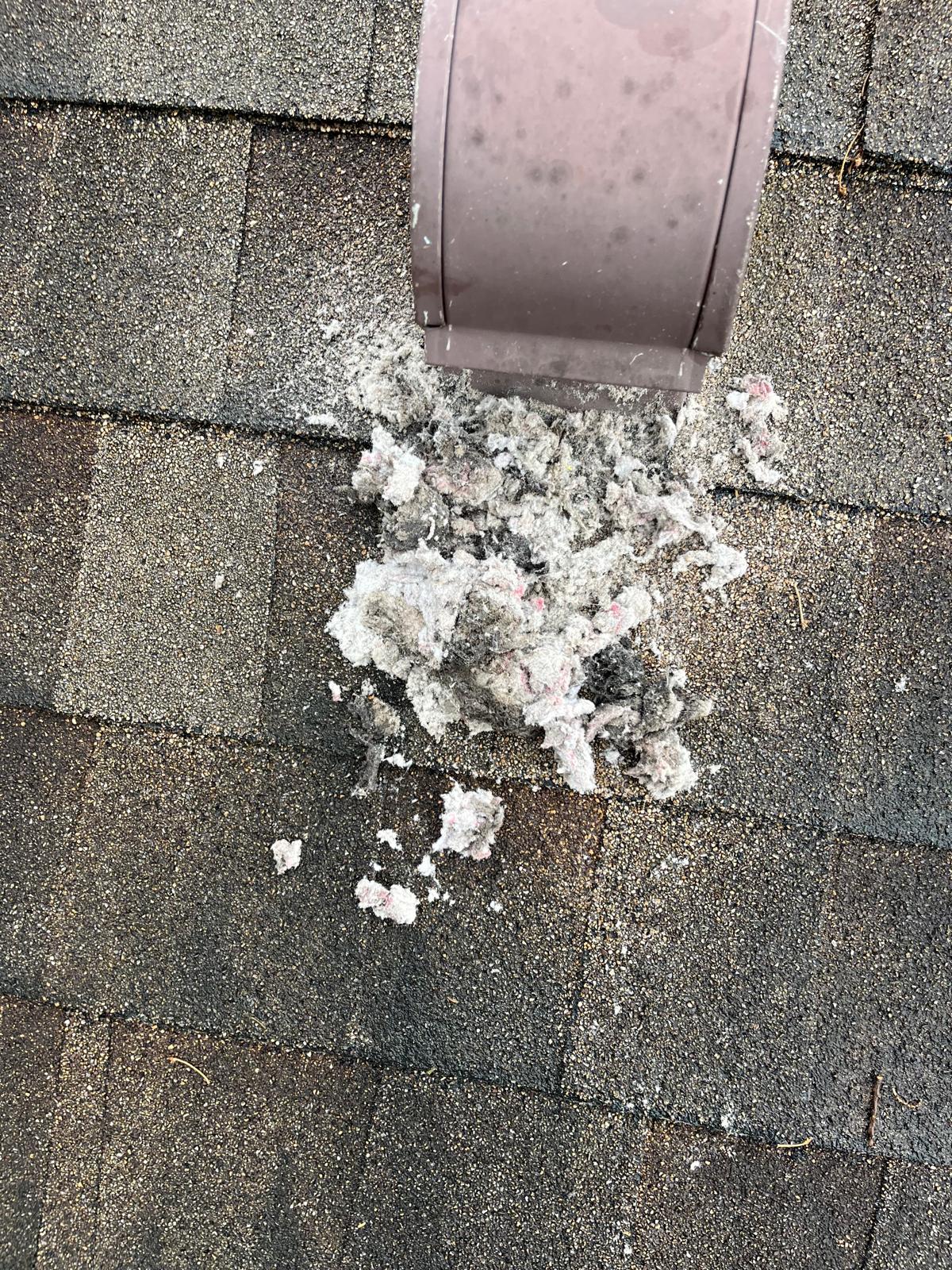
- From the yard: lint caught on the shingles around the cap, or chirping inside a wall or ceiling in spring.
What each sign means is covered in our seven warning signs of a clogged dryer vent.
Can a roof dryer vent be cleaned without going on the roof?
Partly, but not completely. Much of the run can be vacuumed and brushed from the laundry room end. The cap is the hard part: it is where lint mats, flappers stick and nests get built, and a brush pushed up from below often never reaches it. That is why our technicians clean a roof run from both ends: inside from the dryer, and up on the roof at the cap.
Our clogged vent guide warns against pushing a brush up a long vertical roof vent from inside: it gets stuck, makes the blockage worse, and usually still does not reach the cap. Consumer rod kits also bind and come apart in long runs. And please do not climb up with a brush kit: concrete barrel tile is slick and brittle. Our guide to cleaning a dryer vent yourself explains which setups are safe to do at home.
If you hire someone, ask three things first: whether they go up on the roof to clear the cap, whether they brush the whole run all the way to it, and whether they test airflow when they finish.
What about bird and wasp nests in a roof vent?
A nest turns a partly clogged vent into a fully blocked one. The warm exhaust draws birds, especially in spring, and a flapper that no longer closes leaves an open pipe. The USFA report lists nests of small birds and other animals among the causes of blocked dryer exhaust vents, and advises checking that nests are not blocking the outside vent.
Seasonal homes see the most of it. We regularly find nests, geckos and wasp activity at exterior vent terminations, far more often where the dryer sat unused from May through November. If the house was closed for the season, have the cap checked before the first load. Do not try to brush a nest out: it compacts and moves deeper. When we find one, we clear the nest material, clean the line, and tell you if the cap or hood needs replacing.
A mesh screen over the cap to keep birds out backfires. The USFA report advises against using wire screen or cloth on outside dampers, “as these can collect lint and clog areas of the dryer vent.” A dryer vent cap should have a backdraft flapper, not a screen.
What does SunDuct’s roof dryer vent cleaning include?
The whole line, from the dryer collar to the roof cap, cleaned from the laundry room and from the roof, with the cap cleared and inspected and the airflow checked before we leave, not just the first few feet behind the dryer. On the Treasure Coast, a roof vent cleaning covers:
- An inspection of the full dryer vent line, with photos.
- The dryer pulled out and disconnected, and the complete run vacuumed and rotary brushed.
- The roof cap cleaned and inspected up on the roof, including its flapper.
- The transition duct behind the dryer cleaned and inspected for crushing or kinks. If it is crushed or plastic, we photograph it and tell you, so you or an appliance installer can replace it.
- In-line booster fans, which some long runs have, opened and cleaned around.
- Airflow verified with a manometer, and before and after photos of what came out.
SunDuct is a cleaning company, not an installer: we do not replace sheet metal, reroute runs or install vents. If we find a disconnected joint in the attic, a missing exterior damper or other damage, we photograph it and tell you plainly what it is so a licensed HVAC contractor can handle the repair.
Treasure Coast home with a vent through the roof? Call or text 772-577-2765, or see how we work on our dryer vent cleaning in Port St. Lucie page.
How often should a roof dryer vent be cleaned?
At least once a year, and every six months when the run is over 25 feet or has several elbows, as some two-story roof runs do. That is the schedule in our Florida guide to how often to clean a dryer vent. Book sooner if drying times creep up, and have the cap checked whenever the house has sat empty for a season.
What does rooftop dryer vent cleaning cost?
We do not publish a separate roof price, because the price depends on the run: its length, its elbows and how hard it is to reach. A roof termination often costs a little more than a short wall vent, because of the ladder work and the cleaning from above, and long roof runs get a flat written quote up front. Every price is confirmed in writing before work starts, with no per vent charges and no on site upsells.
If you are booking an air duct cleaning anyway, adding the dryer vent makes it our $129 bundle for a single family home of about 2,500 square feet with up to 10 vents; air duct cleaning on its own starts from $99 for that size of home. Our Florida dryer vent cleaning cost guide explains what moves the number.
Thank you! Your request is in.
We received your details and will call or text you the same day to confirm your appointment.
Need us right now? Call 772-577-2765
Roof dryer vent questions
Can a dryer vent go straight up through the roof?
Roof exits are common here, but whether a particular route is allowed is a question for a licensed contractor and your dryer's installation instructions. The 2012 USFA report summarized the building codes this way: dryers must exhaust directly outdoors, venting into attics, soffits, ridge vents or crawl spaces is prohibited, and total vent length is capped at 35 feet, shorter with turns. We clean vents; we do not install or reroute them.
Why is there lint on my roof around the dryer vent?
Lint gathering around the cap is a sign that the line behind it may be restricted, or that the flapper is not opening fully, so lint builds up at the exit instead of blowing clear. It is the roof version of lint clumps hanging from a wall hood. Treat it as a reason to have the run checked and cleaned, rather than sweeping the shingles and moving on.
Is a roof vent more dangerous than a wall vent?
Not by design, but it is far more likely to be neglected, which comes to the same thing. The U.S. Fire Administration's appliance fire safety page lists failure to clean (31%) as the leading factor contributing to the ignition of clothes dryer fires in homes from 2018 to 2020. A roof run nobody can see is the easiest one to forget.
Do I need to be home for the cleaning?
Someone needs to let us in and be there at the end, because the walkthrough is part of the job: you see the before and after photos, what came out of the line, and whether the transition duct or cap needs attention. If you cannot be there yourself, a neighbor, tenant or property manager works fine.
Get the whole roof run cleaned, cap included. Treasure Coast homeowners can call or text 772-577-2765 for a flat price confirmed in writing before work starts. In Frisco and the nearby North Texas towns we serve, call our Frisco office at 469-405-6353, open daily 9 AM to 5 PM.