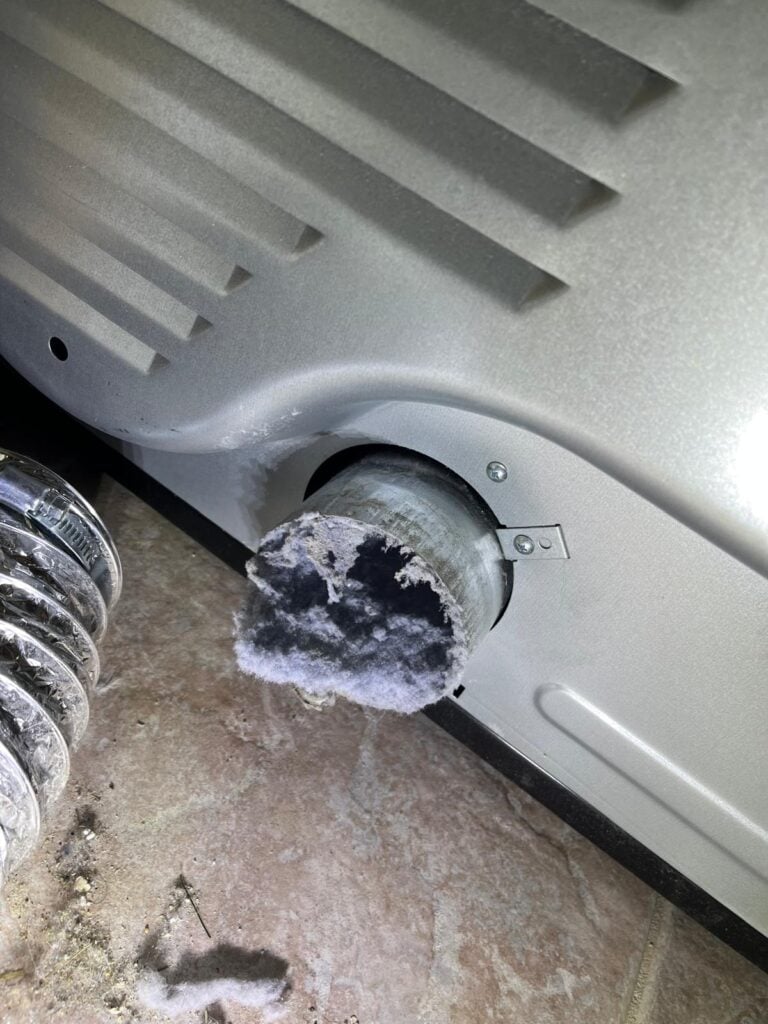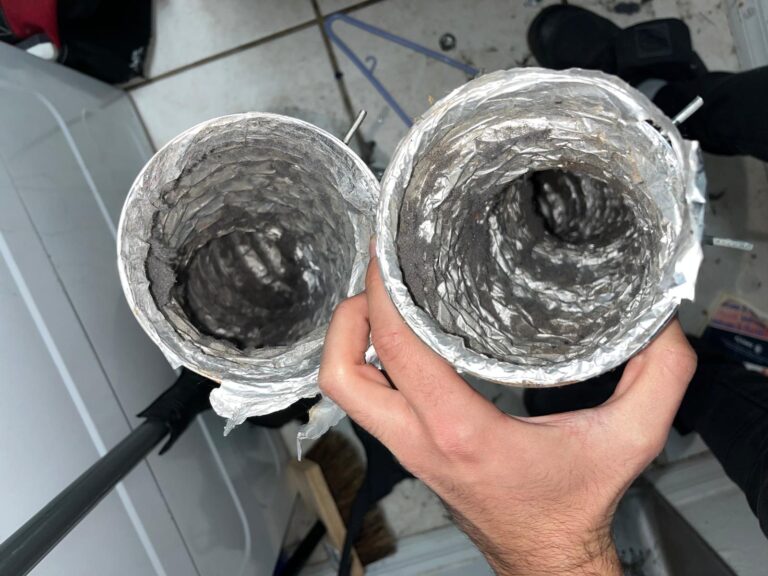
“How often should I clean my dryer vent?” is one of the most common questions we get — and there is no single right answer. The honest answer is: at least once a year for most households, and every six months if any of the following apply. Below is the actual cadence we recommend to customers across Port St. Lucie, Vero Beach, Fort Pierce and the rest of the Treasure Coast, why it matters, and how to tell when your vent is overdue.
The short answer
- Single household, light laundry (4-6 loads/week): once every 12 months.
- Family of 4+ or daily laundry: once every 6-9 months.
- Pet households (especially shedding dogs): every 6 months.
- Long vent runs (over 25 feet, or with multiple elbows): every 6 months.
- Florida coastal homes with sandy-laundry seasons: every 6 months.
Why annual cleaning is the floor, not the ceiling
Lint is the main reason dryer vents need regular service. Even a properly screened lint trap catches only 60-80% of the fibers a load produces; the rest goes into the vent line. Over a year, that’s pounds of lint compacted along the inside of the vent — and dry lint is one of the most flammable materials in a typical home.
According to the US Fire Administration, an estimated 2,900 dryer-related house fires occur every year in the United States. Roughly one-third are caused by lint buildup. Annual professional dryer vent cleaning dramatically reduces this risk.
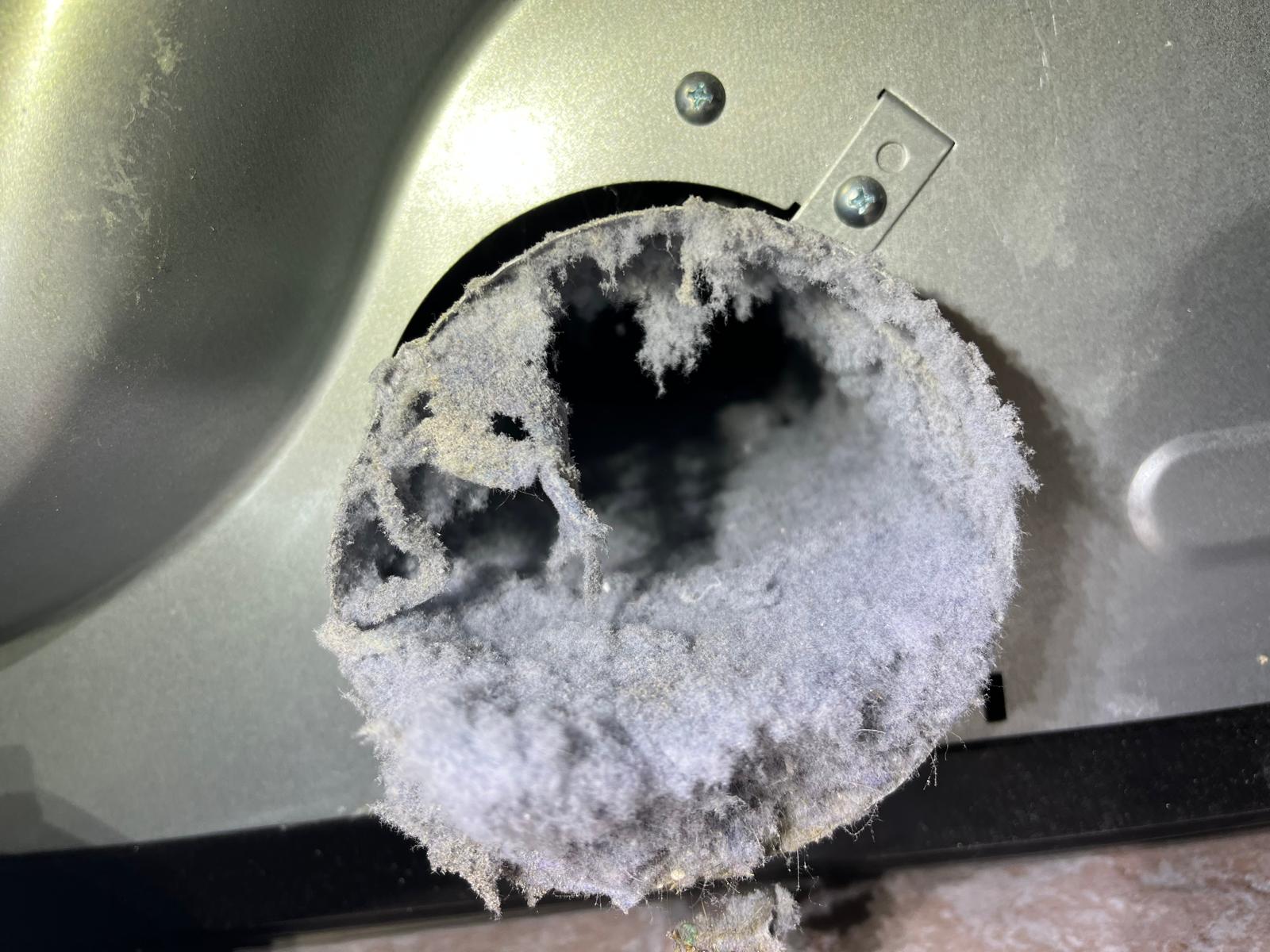
5 signs your dryer vent needs cleaning right now (regardless of timing)
- Clothes take more than one cycle to dry. If a normal load needs two or three cycles, the vent is restricting airflow.
- The dryer itself is hot to the touch. Hot exterior = the unit is overheating because it can’t exhaust properly.
- A burning smell when the dryer runs. That’s lint scorching against the heating element. Stop, unplug, and call.
- The laundry room is unusually humid. The water vapor that should be venting outside is leaking out of the vent connection inside the house.
- Lint visible at the outside vent hood, especially in clumps. Indicates the line is restricted upstream.
SunDuct does professional dryer vent cleaning across the Treasure Coast — flat rate, same-day appointments often available.
Call 772-577-2765 or request a quote.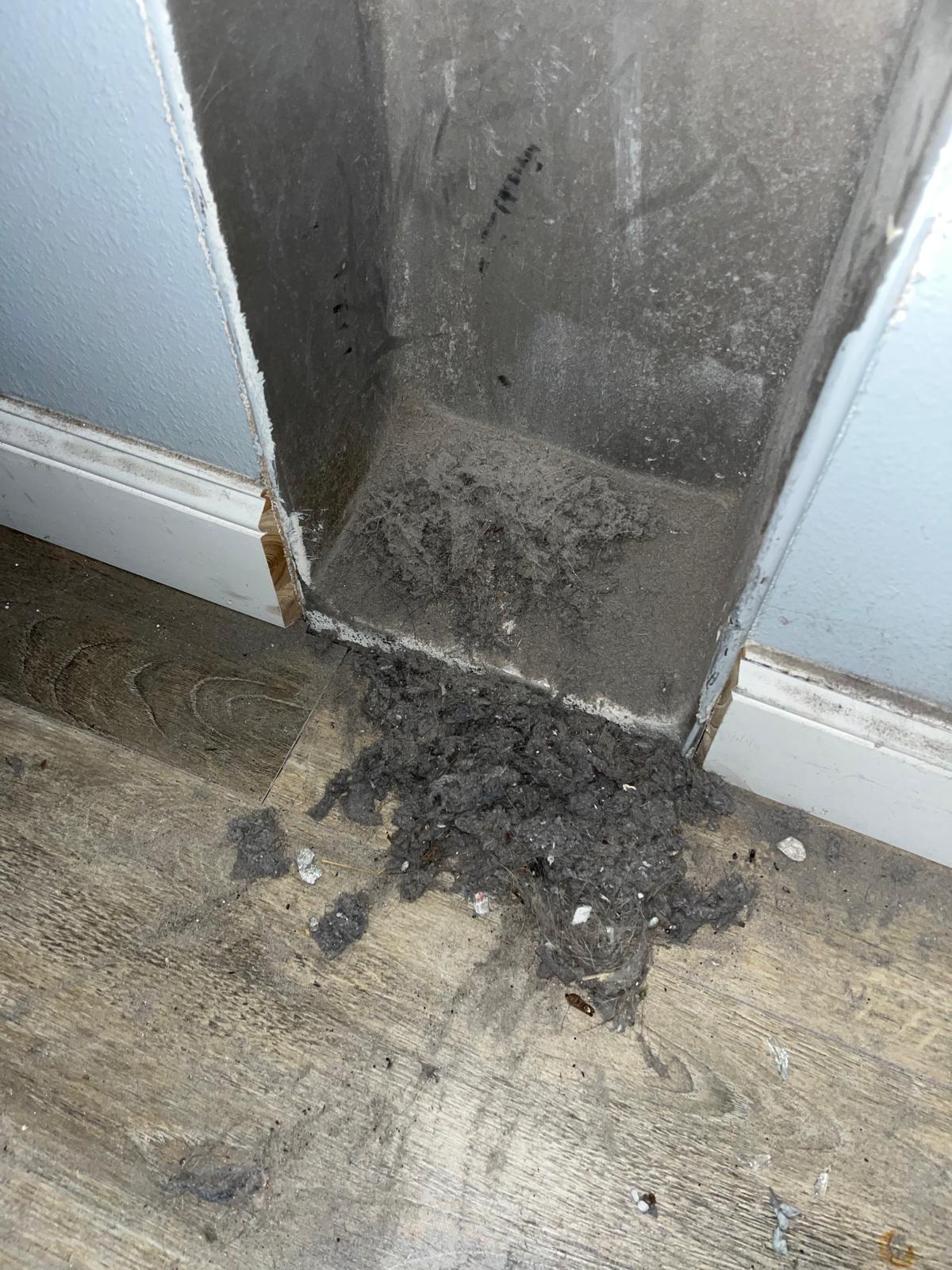
What makes Florida dryer vents fill up faster
A few Florida-specific factors:
- Beach sand, marsh grit, and humid air. Sand grains stick to damp clothes and travel into the vent line.
- Year-round laundry loads. No seasonal break — the vent works 12 months.
- Bird and rodent nests at the exterior vent hood. Especially in attic and roof vents, very common on the Treasure Coast.
- Long roof-vent runs in 2-story homes. More distance = more places lint can compact.
How professional dryer vent cleaning works
A NADCA-standard dryer vent cleaning isn’t just running a brush through. The full process is:
- Disconnect the dryer and remove the transition hose.
- Inspect and (if needed) replace the flexible transition hose.
- HEPA negative-air vacuum on the vent line.
- Rotary brush rotating through the full vent run (often 25+ feet).
- Exterior vent hood removal, cleaning, and inspection — including bird/animal guard check.
- Manometer airflow test to verify proper venting.
- Walk-through with the homeowner showing before and after.
How to extend the time between professional cleanings
You can’t skip professional cleaning entirely, but you can stretch the interval:
- Empty the lint trap before every single load (not after).
- Wipe the lint screen with a damp cloth monthly to remove fabric-softener residue.
- Vacuum behind the dryer every 3 months.
- Keep dryer-vent transition hose to the shortest possible run with no kinks.
- Replace the white plastic flex hose with rigid metal duct.
Bottom line
If your dryer vent hasn’t been professionally cleaned in the past 12 months — and especially if you’re seeing any of the warning signs above — get it done. The cost ($129 for the SunDuct bundle that includes air duct cleaning too) is a fraction of any kind of fire damage, and the dryer itself will run faster and use less electricity. Call 772-577-2765 or request a free quote — same-day appointments available across Port St. Lucie, Vero Beach, Fort Pierce and the rest of the Treasure Coast.
Got air-duct or dryer-vent questions?
SunDuct is the Treasure Coast’s local team for honest, NADCA-standard cleaning. Same-day appointments often available. Curious about the ducts themselves? See how often to clean your air ducts.
Frequently Asked Questions
Dryer vent cleaning frequency: common questions
How often should the dryer vent be cleaned in a condo or townhouse?
Same schedule as a house, with one extra step first: find out where your responsibility ends. In a lot of stacked and attached buildings the run past your wall belongs to the association, not to you, and the part you own may be nothing more than the transition hose and the first section of duct. Ask the property manager who maintains the common run and when it was last done, because in a shared or stacked system a neighbour’s neglected line can restrict yours. Once you know the boundary, the answer for your own section is the usual one: annually, or every six months if you do a lot of laundry.
I rent the house out. Who is responsible for the dryer vent?
Read the lease first, because it varies, but the vent is part of the building rather than part of the appliance, so it is generally handled the way other building systems are handled, by the owner. Tenants realistically own the lint screen and nothing beyond it. The practical approach is to put the vent on the same annual calendar as the air conditioning service so it does not depend on anybody remembering. It is worth doing properly for a rental: you cannot see how much laundry a tenant runs, turnovers are exactly when nobody is checking, and a dated cleaning receipt is useful documentation if you ever need it.
How do I know the cleaning actually worked?
Three checks, and none of them require you to trust anyone. First, drying time should go back to one normal cycle for a normal load, and you will notice that on the very next wash. Second, go outside while the dryer runs and look at the vent hood: the flapper should be pushed fully open with strong, steady air coming out, not fluttering. Third, ask for the before and after photos and the airflow reading if the company took one. If nothing changed after a cleaning, the restriction is somewhere a brush cannot fix, usually a crushed or disconnected section inside a wall, and that needs to be found rather than cleaned again.
I barely use my dryer. Can I skip it?
If you genuinely run a couple of loads a month, yes, you can stretch the interval well past a year, and we are not going to pretend otherwise. But do not skip looking at the outside vent hood twice a year, because in Florida the thing that blocks a lightly used vent usually is not lint. It is a bird nest, a wasp nest, or a flapper that has corroded stuck, and a line that rarely gets blown out is exactly the one that stays undisturbed long enough for something to move in. Thirty seconds with the dryer running, standing at the hood, tells you what you need to know.
Should I clean the dryer vent when I buy a house?
Yes, once, at move-in, and this is one of the few times we will say that flatly. You have no idea when it was last done, the previous owner probably did not either, and a standard home inspection does not include running a camera or a brush through the full vent run. It is the same logic as changing the locks. Since we are already at the house, most people take the $129 bundle and have the air ducts done at the same time, which covers the other unknown you inherited. If we open it up and find the vent is genuinely clean, we will tell you that too.