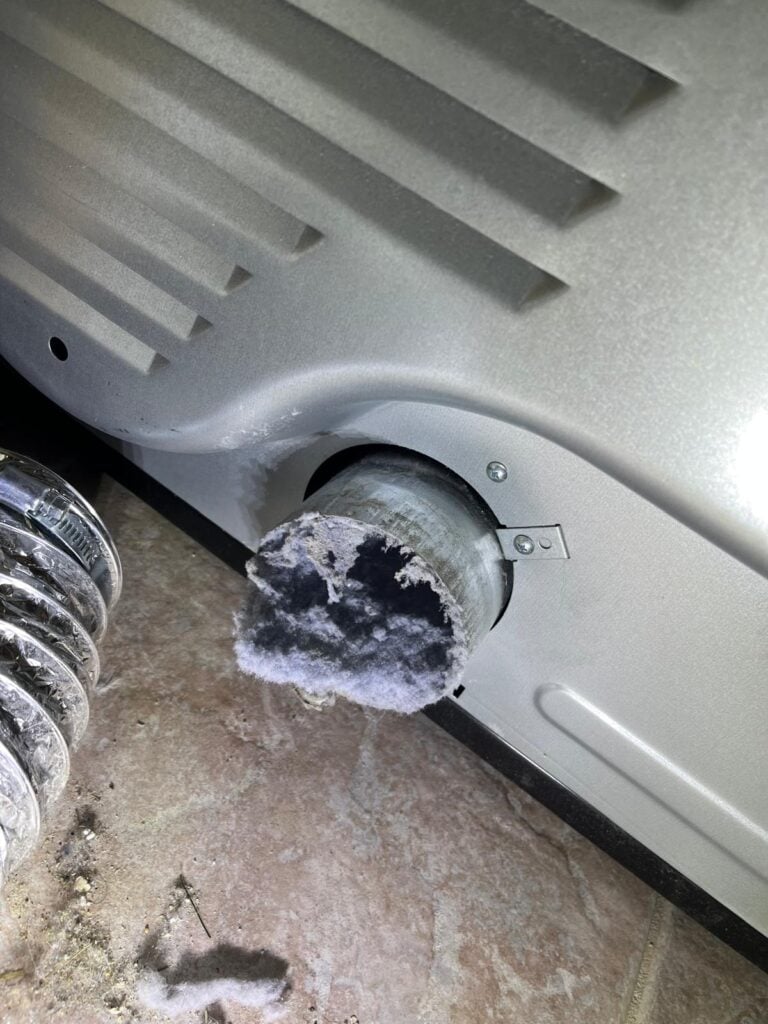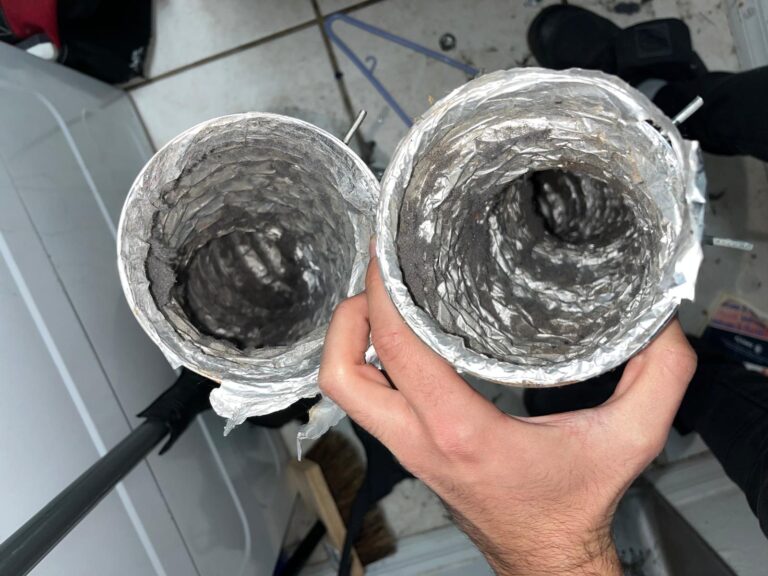
Black Dust Around AC Vents in Florida: 4 Real Causes
Grey or black streaking on the ceiling around a supply vent is one of the most common things Treasure Coast homeowners call us about, and it is one of the most misdiagnosed. Three of the four causes are cosmetic and cheap to solve. One of them means moisture is sitting somewhere it should not. Here is how to tell which one is on your ceiling before you spend money on the wrong fix.
Cause 1: filter bypass, the most common one by far
If the filter does not seal tightly in its slot, unfiltered air slips around the edges instead of passing through the media. That dirty air travels through the system and gets deposited on the first surface it hits at speed, which is the ceiling right at the edge of the register. The classic signature is a sharp fan shaped smudge that follows the direction of the airflow, darker at the vent and fading outward.
What to check: pull the filter and look at the frame. If there are visible gaps at the sides, or if the filter is warped or drooping, air is going around it. A correctly sized filter with a snug fit fixes this permanently. Cleaning the ducts without fixing the seal just means the streaks come back.
Cause 2: candle and cooking soot
Scented candles, oil burners and high heat cooking in an open plan Florida great room release very fine carbon particles. They circulate, and they collect on the cool metal edge of the register and on the ceiling paint around it. This one shows up on almost every vent in the house at roughly the same intensity, and it is heaviest in whichever room the candles actually burn.
How to confirm: soot wipes off the register with a damp cloth and leaves a grey mark on the cloth. It is on the outside surfaces of everything nearby, not just the vent. Duct cleaning helps with the volume of circulating particles, but the candle habit is the actual source.
Cause 3: condensation staining, the Florida special
This is the one that is far more common here than in most of the country. When very cold supply air meets high indoor humidity, moisture condenses on the metal boot behind the register and on the ceiling around it. Damp paint grabs airborne dust and holds it. The result looks like a ring or a halo around the vent rather than a directional streak, and it often has a slightly blotchy, water stained edge.
You see it most in homes where indoor humidity runs high: seasonal residences that sit closed up with the thermostat at 78 for months, houses on the water in Jensen Beach and Hutchinson Island, and any home where the AC is oversized and short cycles without ever pulling humidity down.
Why it matters: condensation staining means liquid water is present at that boot on a regular basis. That is the condition mold needs. It is the one cause on this list that can escalate.
Cause 4: actual microbial growth in the duct or boot
When condensation has been happening for a long time, growth appears on the insulation at the boot or on the duct liner just inside the opening. Unlike dust, it does not sit in a smooth even film. It appears as speckled or fuzzy spots with irregular edges, often greenish or brown rather than pure black, and it usually comes with a musty smell in that room when the system first kicks on after being off.
Cleaning removes what is there. It does not remove the reason it grew. If the humidity condition is not fixed, it returns within a season. Our full guide on mold in air ducts covers the difference between surface growth and a system that needs an HVAC contractor.
A two minute test to tell them apart
- Look at the shape. A directional fan pointing away from the vent is filter bypass. An even ring or halo is condensation. Scattered irregular speckles are growth. A light even film on every vent equally is ordinary household dust or soot.
- Wipe a small area with a damp white cloth. Dust and soot lift off cleanly and the ceiling underneath looks normal. Growth smears and leaves a stain that will not lift.
- Touch the metal boot behind the register on a humid afternoon. If it is damp or beaded, you have a condensation problem regardless of what the ceiling looks like.
- Smell the room within a minute of the AC starting. A musty first blast points at moisture in the system, not at dust.
What each one actually costs to fix
- Filter bypass: a correctly sized filter, a few dollars. Repaint the ceiling once and it stays clean.
- Soot: free. Move the candles, use the range hood, wipe the registers.
- Condensation: the humidity has to come down. That is a thermostat and dehumidification conversation with an HVAC contractor, sometimes a boot insulation issue.
- Growth: clean the system, then fix the moisture, in that order, or you will pay twice.
Frequently asked questions
Is black dust around AC vents dangerous?
The dust itself, in most cases, is settled household particles and carbon from candles or cooking. It is a cleaning problem, not a health emergency. The exception is when the marks come with a musty smell and a damp boot, which means moisture is present and the situation can change over a summer. Judge it by the smell and the moisture, not by the color.
Why do my vents get black again a month after I clean them?
Because the source was never removed. Wiping the ceiling treats the symptom. If air is bypassing the filter, the marks return on the same schedule every time. Check the filter fit first, before you assume the ducts are the problem.
Does this happen more in Florida than other states?
The condensation version does, clearly. Cold supply air meeting 70 percent plus indoor humidity is a Gulf and Atlantic coast problem, and it is worse in seasonal homes that stay closed for months with the AC barely running. In dry climates the same house would show filter bypass streaks and nothing else.
Will air duct cleaning stop the black marks?
It stops them when the source is dust and debris moving through the system, which is the majority of cases. It does not stop them when the source is a poorly sealed filter or ongoing condensation, and an honest cleaner will tell you which one you have and show you a photo of it. We include before and after photos of the same vents on every job for exactly that reason.
How often should Treasure Coast homes have this checked?
Look at your registers at every filter change, which for most homes here means every 60 to 90 days because the AC runs nearly year round. Catching a damp boot early is the difference between a thermostat adjustment and a remediation bill. See how often to clean air ducts for the full schedule.
Want someone to look inside first
SunDuct cleans air ducts for a flat $99 in single family homes up to roughly 2,500 square feet and 10 vents, $129 with the dryer vent included, across St. Lucie, Martin and Indian River counties. Call or text (772) 577-2765 or use the form on our contact page.