Musty Smell From AC Vents: Where It Comes From and What Fixes It
A musty smell from AC vents usually means moisture is sitting somewhere in the system: on the cooling coil or in the drain pan, inside the ducts and returns, or in the house itself when indoor humidity runs high. Duct cleaning removes what has collected in the ducts, registers and blower. Drain, coil and humidity problems need an HVAC technician.
The fix depends on which source you have. Below are the usual sources, how to narrow them down yourself, and which ones a duct cleaning actually solves. We clean air ducts on the Treasure Coast and in Frisco, TX, and we would rather point you to the right trade than sell you a service you do not need.
Why does my house smell musty when the AC is on?
Because the air conditioner moves air past the places where moisture collects, then carries it to every room. The cooling coil is designed to pull water out of the air; that water drips into a pan and leaves through a drain line. When water stands, or the coil, ducts or insulation stay damp, the air picks up the smell.
The EPA guide to air duct cleaning puts it plainly: research suggests that condensation on or near cooling coils “is a major factor in moisture contamination of the system.” A smell that is strongest in the first minute after the system starts points at moisture in the system, not at dust.
Where the smell comes from, and who fixes it
| Source | Who fixes it | Does duct cleaning help? |
|---|---|---|
| Clogged condensate drain or standing water in the drain pan | HVAC technician | No |
| Dirty evaporator coil | HVAC technician | Not on its own |
| Dust and debris in the ducts, returns, registers and boots | Air duct cleaning | Yes |
| Dirty blower wheel and air handler | Air duct cleaning (part of our job) | Yes |
| Wet or moldy duct insulation | HVAC contractor (replacement) | No |
| Condensation at the registers and boots | HVAC contractor (humidity, insulation) | It cleans the boot and register, not the cause |
| High indoor humidity or an oversized system | HVAC contractor | No |
| A return leak pulling attic air | HVAC contractor (repair) | No; we photograph it and tell you |
| Dirty or poorly fitted filter | You | No |
The coil, the drain pan and the drain line
Start here, because this is where the system handles water. The ENERGY STAR maintenance checklist lists checking the condensate drain as part of a contractor check-up and notes that “a plugged drain can cause water damage in the house and affect indoor humidity levels.” It lists cleaning the evaporator and condenser coils as contractor work too. EPA adds that substantial standing water in the pan “indicates a problem requiring immediate attention.”
The ducts, returns and blower
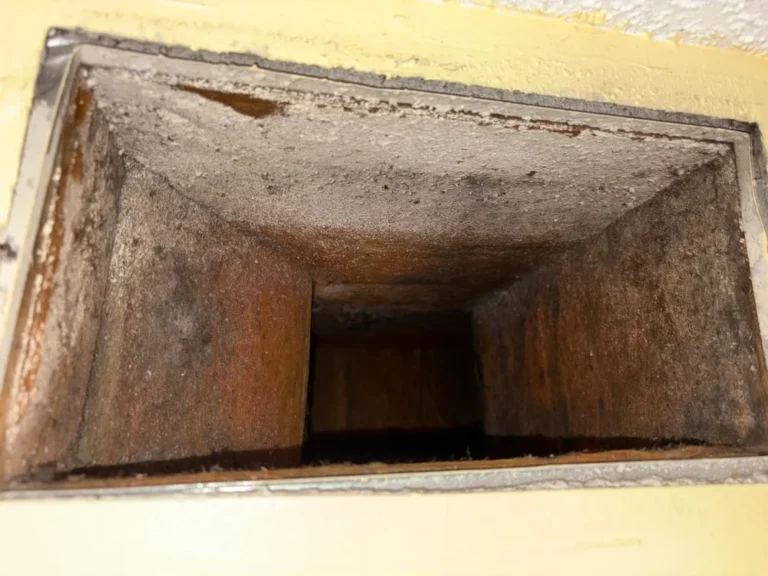
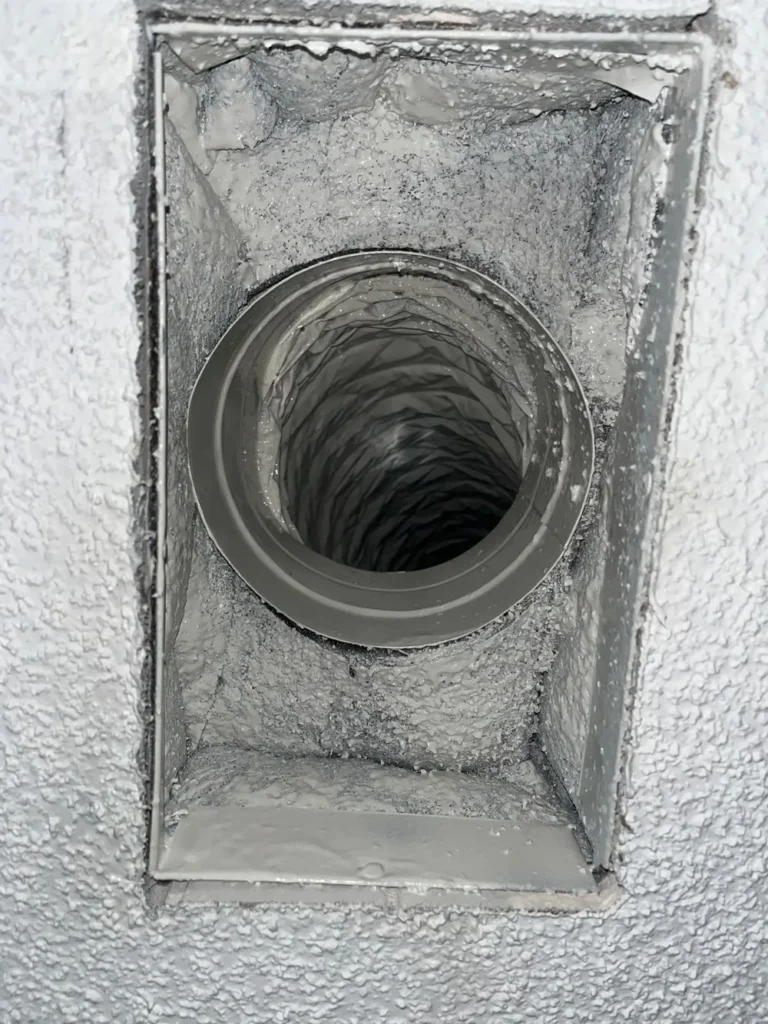
EPA counts a musty odor among the signs that ducts may be contaminated with large deposits of dust or mold. Buildup in the supply and return lines, the boots behind the registers and the blower wheel is the part duct cleaning fixes. The air handler and blower wheel are where dust and moisture collect first, so we clean them as part of the job.
Damp duct insulation
Many ducts are insulated, and EPA is direct about what happens when that insulation gets wet: “if you have insulated air ducts and the insulation gets wet or moldy it cannot be effectively cleaned and should be removed and replaced.” That is replacement work for an HVAC contractor, not a cleaning job. If we see it, we photograph it and show you.
Condensation, humidity and system size
In a humid house, cold supply air can make the metal boot behind a register sweat, and damp surfaces grab dust and hold it. An oversized system makes it worse: EPA notes that a unit that is too big “will cycle on and off frequently, resulting in poor moisture removal, particularly in areas with high humidity.” EPA also advises making sure ducts in attics are properly sealed and insulated to keep condensation out of the system. Humidity control, insulation and sizing are HVAC work.
Return leaks
A return that is pulling air from the attic brings attic air and its humidity into the system. If we find one, we photograph it and tell you. Sealing or replacing duct is HVAC contractor work, and we do not sell repairs.
What should you check first?
Check when the smell happens, the filter, any water around the indoor unit, your indoor humidity, and the registers. None of these needs tools, and together they tell you whether to call an HVAC technician or a duct cleaner before you spend anything. Here is what to look for in each:
- When does it smell? Only in the first minute after the system starts, the whole time it runs, or even with the system off. If the smell is there with the AC off, the AC may not be the source.
- The filter. EPA advises changing filters regularly and making sure “air cannot bypass filters through gaps around the filter holder.” ENERGY STAR suggests you inspect, clean or change the filter once a month.
- Water. Look for standing water, a wet floor or water stains around the indoor unit. Water where it should not be is a call for an HVAC technician, not a duct cleaner.
- Humidity. EPA’s guide to mold, moisture and your home says to keep indoor humidity below 60 percent, ideally between 30 and 50 percent, and that a humidity meter is a small, inexpensive instrument sold at many hardware stores. The same guide says to keep AC drip pans clean and drain lines flowing.
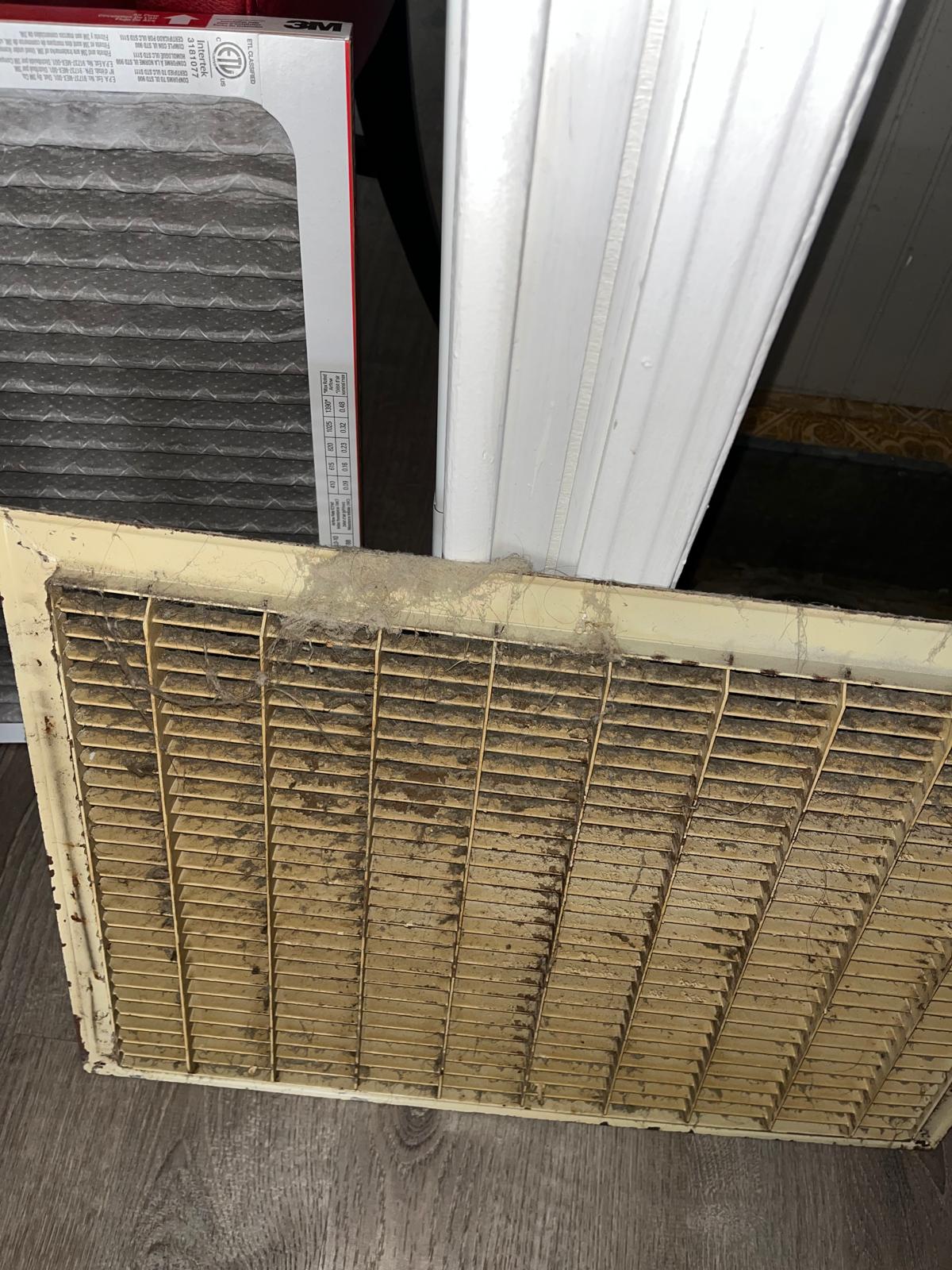
- The registers. Touch the metal boot behind a register on a humid afternoon. If it is damp or beaded, you have condensation. Our guide to black dust around AC vents shows how to tell dust, soot, condensation and growth apart.
Filter clean, no water, humidity in range, and the vents still smell? Then the ducts and blower are the next place to look. On the Treasure Coast call 772-577-2765; in Frisco and nearby towns call 469-405-6353.
Which sources does air duct cleaning fix?
Duct cleaning fixes buildup inside the system: dust and debris in the supply, return and trunk lines, the registers and the boot behind each vent, and the air handler and blower wheel. We remove it with HEPA negative air extraction and mechanical agitation, wash and reinstall the registers, and show you before and after photos of the work. Here is how air duct cleaning works, step by step.
Cleaning removes what is there. It does not remove the reason it grew, so if the drain still backs up or the house still runs humid, the smell comes back. An optional EPA registered antimicrobial can be applied after cleaning, on label, but it is not a moisture fix either. More on what sanitizing does and does not do. For when a cleaning is worth paying for at all, see whether air duct cleaning is worth it.
Is a musty smell from the vents mold?
Sometimes, and you cannot tell from the smell or the color alone. EPA notes that although a substance may look like mold, a positive identification can be made only by an expert and may need lab analysis. Either way the fix has two parts: clean out what has collected and stop the moisture behind it, or the smell comes back.
Visible growth on insulation, drywall or the air handler housing is a job for a licensed mold remediation contractor. We do not perform mold remediation. Our guide to mold in air ducts covers the difference between surface growth and a system that needs more than a cleaning.
Why do Florida homes get this more often?
Air conditioners here run for most of the year, and the air they handle is humid. Seasonal and snowbird homes have it harder, because long idle periods let humidity build up before the system goes back into heavy use. If a house has been closed up for months, check the filter, the drain and the humidity first.
Could the musty smell be coming from the laundry room?
Yes, if it is strongest near the laundry. When a laundry room turns muggy whenever the dryer runs, the humid exhaust is escaping into the home through a disconnected, kinked or restricted vent line. EPA’s moisture guidance is to vent clothes dryers to the outside. See the warning signs of a clogged dryer vent to check yours.
Thank you! Your request is in.
We received your details and will call or text you the same day to confirm your appointment.
Need us right now? Call 772-577-2765
Frequently asked questions
Why does my AC smell musty only when it first turns on?
A musty first blast usually points at moisture in the system rather than at dust. That is why the first checks are about moisture: any water around the indoor unit and your indoor humidity, plus the filter. If you find water where it should not be, call an HVAC technician before you book a duct cleaning.
Will air duct cleaning get rid of a musty smell?
It will when the smell comes from buildup in the ducts, registers, boots and blower, because cleaning removes that buildup. It will not when the source is a clogged drain, a dirty coil, wet duct insulation or high indoor humidity. Those need an HVAC technician, and if they are not fixed, the smell comes back after any cleaning.
Can I spray something into the vents to stop the smell?
Sprays from the hardware store do not reach the trunk line, and they do nothing about the moisture behind the smell. EPA also cautions that simply spraying biocides into an operating duct system "may cause much of the material to be transported through the system and released into other areas of your home." Find the source first.
Do you do mold remediation?
No. We are a cleaning company: we clean ducts, registers, the air handler and the blower wheel, and if we find damage we photograph it and tell you plainly what it is. Visible growth on insulation, drywall or the air handler housing needs a licensed mold remediation contractor, and a wet or damaged duct needs an HVAC contractor.
Do you clean AC ducts and vents in Frisco, TX?
Yes. Our Frisco office cleans air ducts and AC vents in Frisco, Plano, McKinney, Prosper, Little Elm, The Colony and Allen, using HEPA negative air extraction with mechanical agitation and a flat quote in writing before any work starts. Call 469-405-6353; the office is open daily 9 AM to 5 PM.
Get the right fix the first time
On the Treasure Coast we clean air ducts across St. Lucie, Martin and Indian River counties: call 772-577-2765 or see our air duct and AC vent cleaning services. In North Texas, see air duct cleaning in Frisco, TX or call 469-405-6353. Tell us what you have already checked, and we will tell you honestly whether the ducts are the likely source.