7 Signs Your Air Ducts Need Cleaning (Florida Check)
Your air ducts need cleaning if you can check off two or more of these seven things: visible dust on the supply register slats, dust resettling on furniture within two or three days of cleaning, a musty smell in the first minute of AC startup, weak airflow or one room that never cools, allergy type symptoms that ease when you leave the house, black specks or debris ringing the vent edges, and a system that has not been cleaned in five or more years (or that came with a house you bought from someone else). One sign on its own is usually a loaded filter or ordinary surface dust. Two or more, in a Treasure Coast home that runs the air conditioning ten months a year, means it is worth looking inside the system.
Here is the part most duct cleaning companies leave out: if your ducts were cleaned in the last three years and none of the seven signs below apply, you do not need service. Change the filter, get on with your life, and check again in a couple of years. Our own guide to how often air ducts need cleaning lands on the same answer.
How to check your own air ducts in about 10 minutes
You do not need tools you would have to buy. This is a walk around the house with a flashlight and your phone.
- A flashlight (your phone light is fine)
- Your phone camera, so you can zoom in on photos of the vent interior
- A step stool for ceiling registers, which is where almost every Florida supply vent lives
- A clean white paper towel
- Five minutes with the AC off, then five minutes right after it kicks on
Start at the return, the big grille that pulls air in. Then check three or four supply registers, ideally one in a bedroom, one in the living area, and one in a room you rarely use. Photograph the inside of each vent through the slats with the flash on. That single photo tells you more than any sales pitch will.
The 7 signs your air ducts need cleaning
1. Visible dust or gray fuzz on the supply register slats
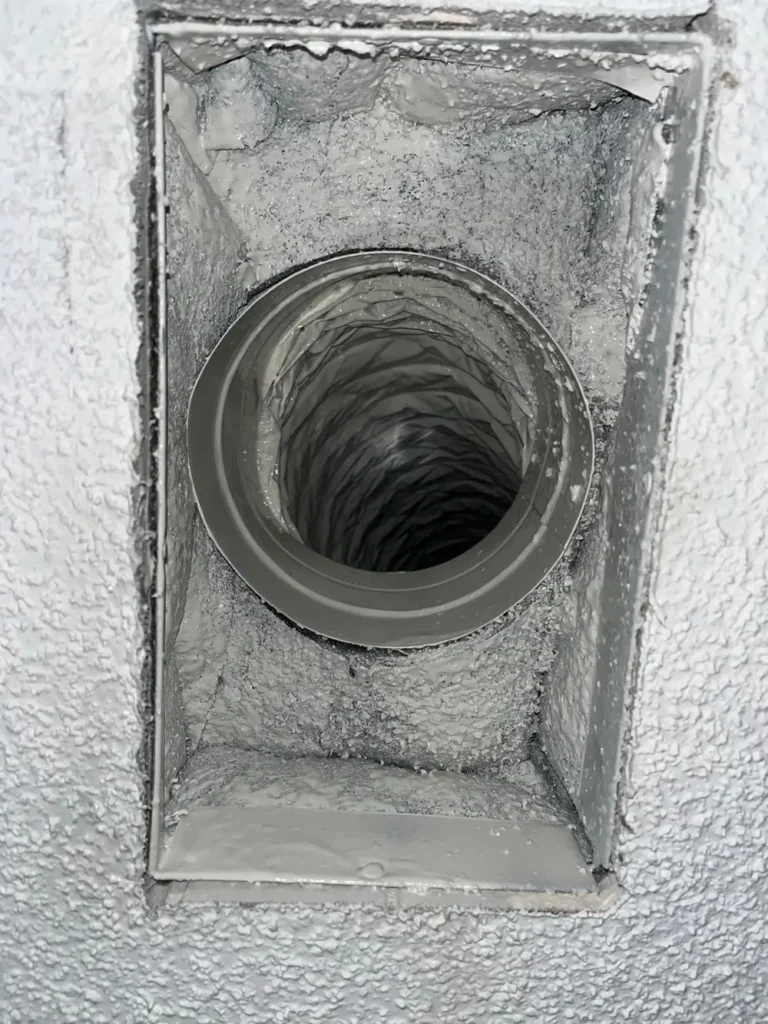
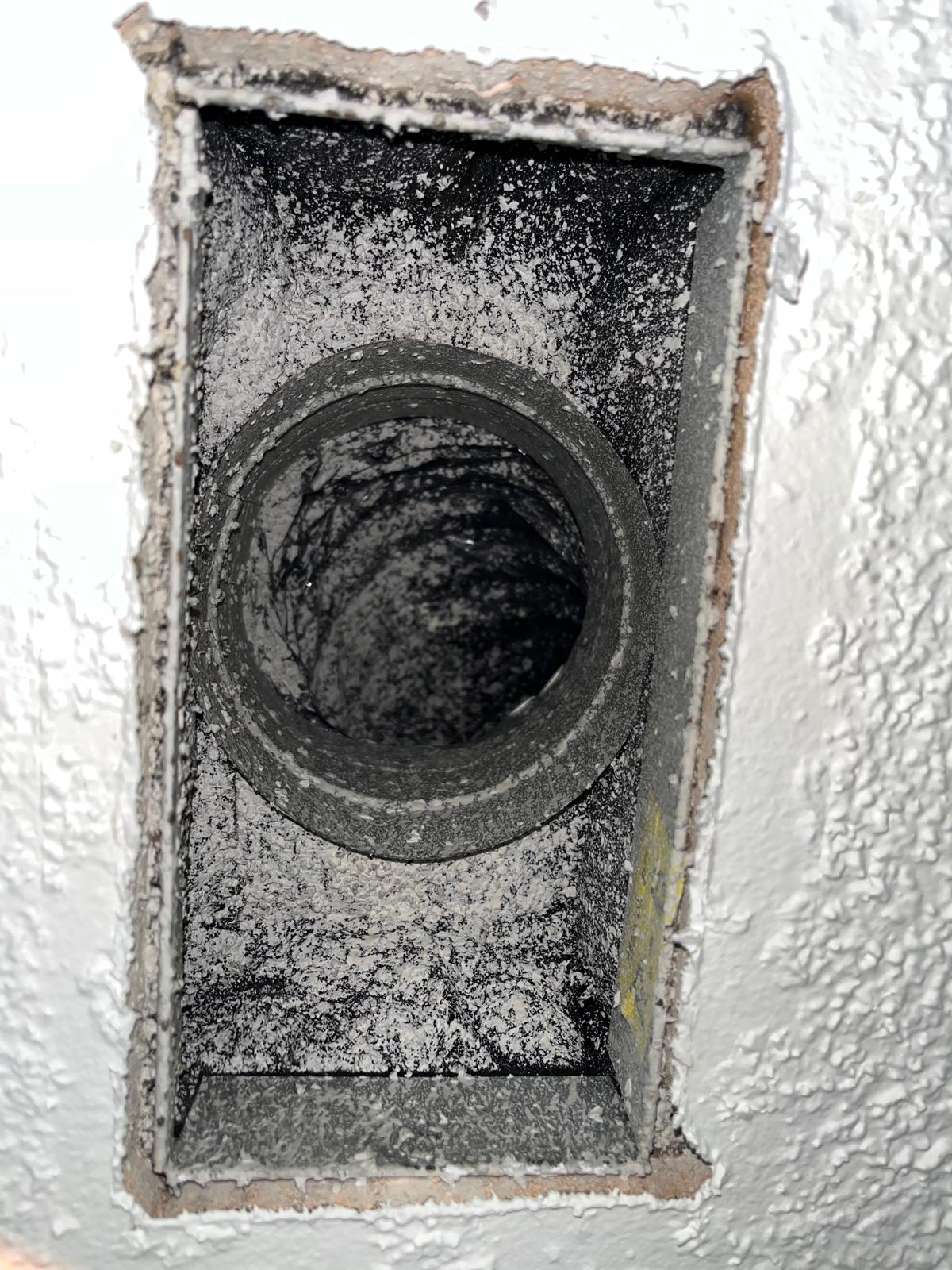
Run a white paper towel along the underside of a supply register. A light film is normal, and it is mostly room dust that settled on the metal from the outside. What matters is what is behind the slats. If your flash photo shows fuzzy gray buildup clinging to the inside edges of the boot, or dust hanging like lint on the first few inches of duct, that material is sitting in the air path and is getting pushed into the room every cycle.
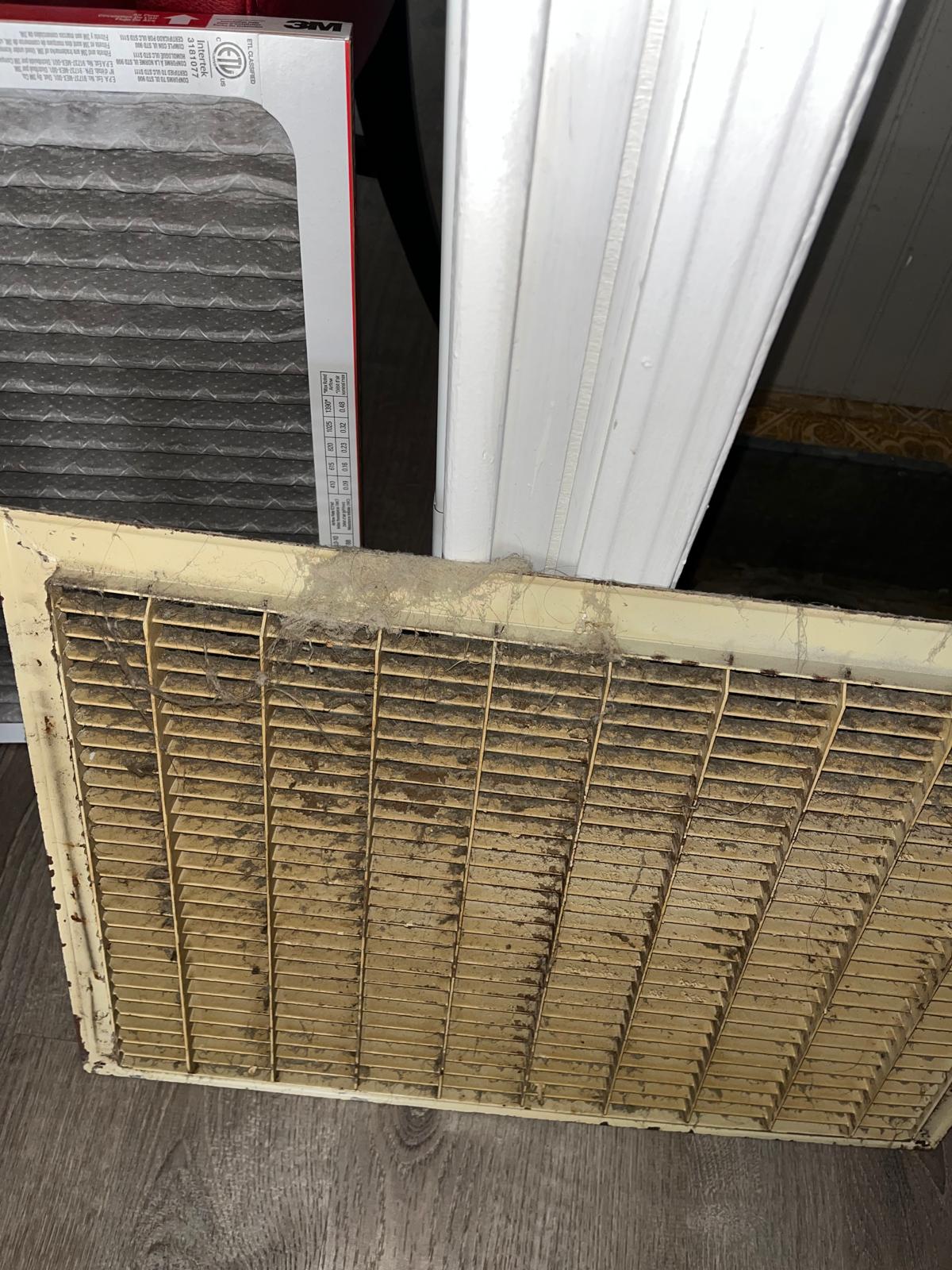
Do not be fooled by a dirty grille alone. A dirty grille wipes clean in thirty seconds and proves nothing.
2. Dust comes back within two or three days of a real dusting
This is the most reliable sign on the list because it is a test, not an observation. Dust the hard surfaces in one room properly, then leave it alone. In a normal Port St. Lucie home you will see a light film again in roughly a week to ten days. If you can write your name on the coffee table on day three, something is actively recirculating dust, and a system with loaded ducts is a common source.
Rule out the easy explanations first: a filter that is past due, a filter one size too loose in its slot so air bypasses around the frame, ceiling fans on high, or ongoing construction next door. If all of those are handled and the dust still returns in days, put a check mark here.
3. A musty smell in the first minute after the AC starts
Stand near a supply vent when the system has been off for an hour, then let it start. The first thirty to sixty seconds of air is the honest sample. A damp, basement style or gym bag smell that fades after a minute points to moisture living somewhere in the system, and in Florida that is a genuinely common finding. Seventy percent outdoor humidity plus a cold coil equals condensation, every single day of summer.
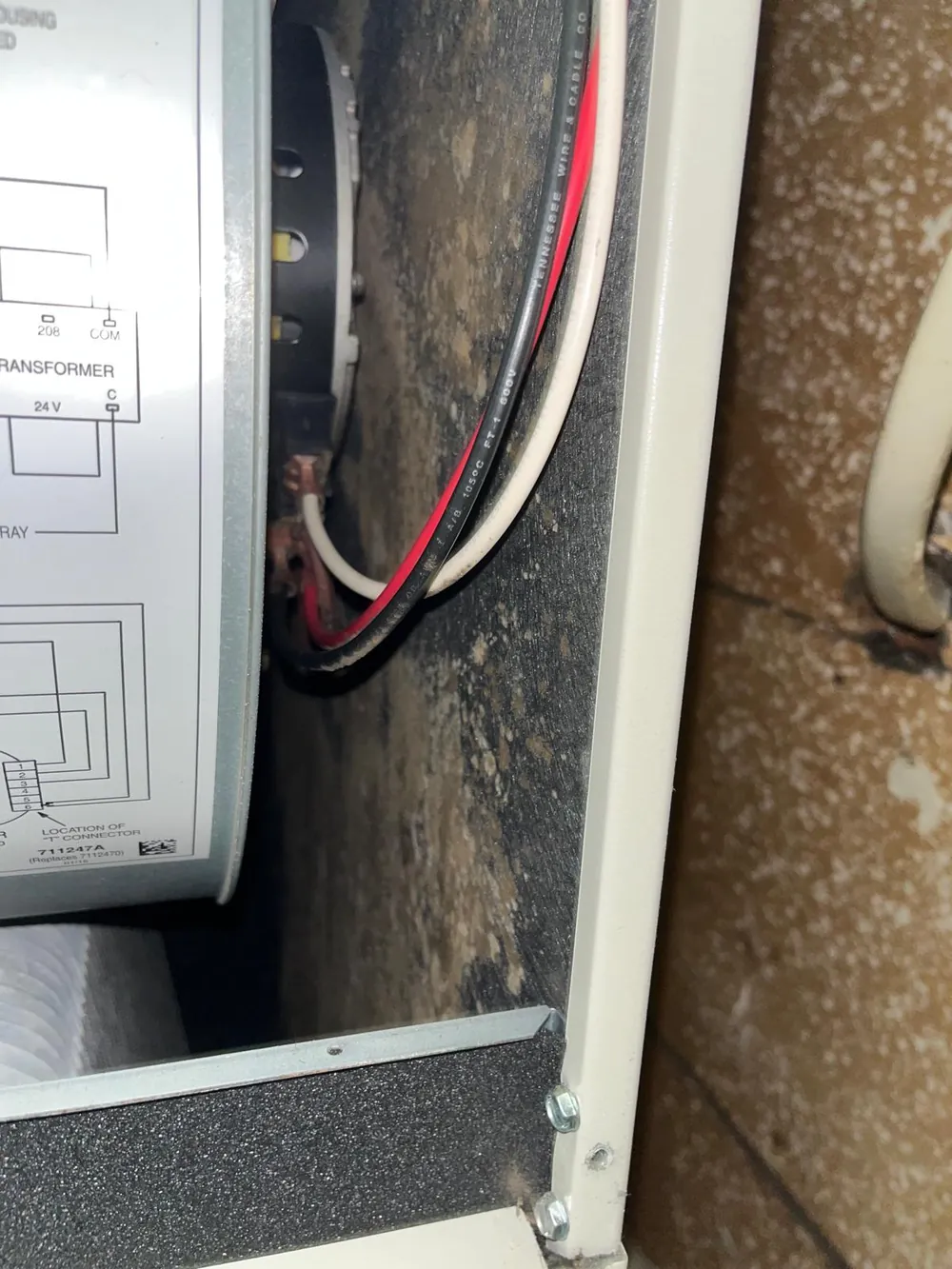
Be careful about what you conclude from a smell. It could be the evaporator coil, a slow drain pan, or wet insulation, none of which duct cleaning fixes. We are the cleaning company and we will say so plainly: if the odor is coming from the coil or the pan, you need an HVAC technician, not a vacuum hose. If you are seeing growth as well as smelling it, read our piece on mold in air ducts before anyone sells you a treatment.
4. Uneven room temperatures and weak airflow at one or two vents
Hold your hand under each supply register while the system runs. You are not measuring anything, you are comparing. If the master bedroom pushes air you can feel across the room and the back bedroom barely stirs a tissue, you have a distribution problem.
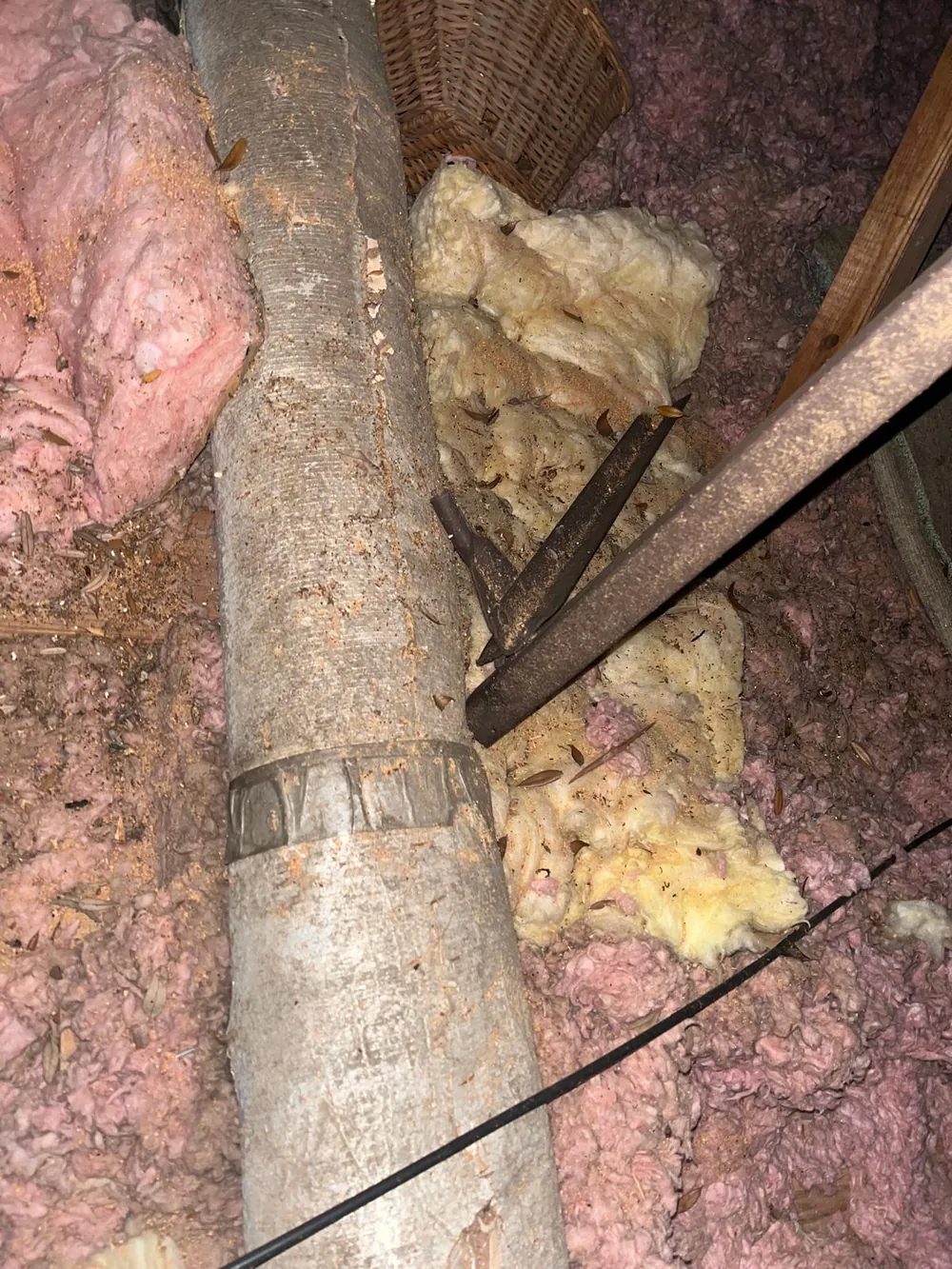
Honest ranking of causes, most likely first: a clogged filter, a closed or half closed damper, furniture blocking a return, a crushed or disconnected flex duct in the attic, and only then debris buildup. Attic flex duct in Florida takes a beating from heat and from anyone who has crawled up there to run a cable line. That is why we photograph what we find and hand you the photos. We do not replace duct, and we will not pretend a cleaning fixed a duct that came apart at the collar.
5. Symptoms that ease when you are away from the house
Notice the pattern, not the diagnosis. If sneezing, congestion, or itchy eyes reliably calm down after a few days away and start again within a day of coming home, the house is doing something. That is worth paying attention to. It is not proof that ducts are the cause, and we are not qualified to tell you otherwise. Pets, carpet, a humidity problem, and outdoor pollen coming through a leaky slider can all produce the same pattern, and a doctor is the right person for the symptoms themselves.
What we can say is that if the house pattern is real and the ducts also fail two or three of the other checks on this list, cleaning them is a reasonable, low cost thing to eliminate.
6. Black specks, streaking, or visible debris ringing the vents
Dark specks on the ceiling around a supply register, or gray streaking fanning out from the vent edges, is one of the most common calls we get on the Treasure Coast. It is worth identifying before you spend money, because the fix depends on what it actually is. Candle and cooking soot, filter bypass pulling unfiltered air past the frame, degrading duct liner, and simple static staining all look similar from six feet below. We wrote a full breakdown of black dust around AC vents in Florida homes that walks through telling them apart.
Loose debris you can see inside the boot, on the other hand, is not ambiguous. Drywall dust after a remodel, insulation fibers, pet hair rolled into mats, or a builder’s trash left in the trunk line all belong in a vacuum, not in your air.
7. Five or more years with no cleaning, or a house you bought from someone else
This is the sign of absence, and it is the reason for roughly half our jobs. If you cannot name a year when the ducts were cleaned, nobody has cleaned them. Buyers of resale homes are in the same position: the seller’s disclosure covers the roof and the water heater, not what has been accumulating in the return since 2009.
Add a renovation to that and it moves from optional to worth doing. Drywall sanding, tile cutting, and popcorn ceiling removal all put fine dust in the air while the AC keeps running and the returns keep pulling. A post renovation cleaning is the single clearest case for the service, and it is not a close call.
Quick reference: what each sign usually means
| What you see or smell | Most likely cause | Does cleaning help? |
|---|---|---|
| Gray fuzz behind the register slats | Buildup in the boot and first few feet of duct | Yes |
| Dust back on furniture in 2 to 3 days | Something is recirculating dust through the system | Usually yes, after ruling out the filter |
| Musty smell in the first minute of startup | Moisture at the coil, drain pan, or in the duct | Sometimes, and have an HVAC tech check the coil |
| One room never cools, weak airflow | Filter, damper, or a crushed or disconnected flex duct | Rarely the cure, but the inspection finds the cause |
| Symptoms that ease away from home | Many possible sources including ducts | Reasonable to eliminate, not a guarantee |
| Black specks around the vent edges | Soot, filter bypass, or liner degradation | Depends on which one it is |
| No cleaning in 5 or more years | Normal accumulation you cannot see from below | Yes |
When you do not need air duct cleaning
We would rather you skip the service than pay for one you did not need and conclude the whole industry is a scam. Skip it if any of the following describe your home.
- The ducts were cleaned in the last three years and none of the seven signs apply.
- Your only complaint is a dusty grille that wipes clean and stays clean.
- You have not tried a fresh filter yet. Change it, wait three weeks, then reassess. A one dollar problem is not worth a hundred dollar solution.
- The house is new construction and the builder had the system cleaned at the end of the punch list. Ask for that receipt.
- Someone knocked on your door or robocalled with a $49 whole house special. That price is a door opener, not a service. Our take on when duct cleaning is a waste of money covers how that pitch usually ends.
If you are still on the fence about whether the service earns its keep at all, the honest version of that argument is in is air duct cleaning worth it, including the cases where the answer is no.
What actually happens if you never clean your air ducts
Nothing dramatic, and anyone telling you otherwise is selling. Here is the realistic timeline in a Florida home that runs its air conditioning most of the year.
Years one through five. A fine coating forms on the duct walls. It is normal, it is not hurting anything, and you would not notice it if we showed you.
Years five through ten. The return side does most of the collecting, because that is where every particle in the house eventually goes. Lint, pet dander, carpet fibers, and drywall dust from whatever work has been done pack into the return boot and the first section of trunk. Supply runs stay comparatively cleaner. If the filter has ever been left in too long, or run loose in its slot, this stage moves faster.
Years ten and beyond. Accumulation starts to narrow the effective opening at boots and takeoffs. Airflow drops a little, the blower runs longer to satisfy the thermostat, and the rooms farthest from the air handler suffer first. Meanwhile the system keeps pushing whatever is loose back into the living space every cycle. None of this is an emergency. It is a slow tax on comfort and on the electric bill, and it is why the sensible interval is measured in years rather than months.
What we deliberately will not tell you is that dirty ducts are making your family sick. The research on that is thinner than the advertising suggests, and we are not doctors. What we will tell you is that we have opened returns in ten year old Port St. Lucie homes and pulled out material the homeowner did not believe came from their own house until they saw the photos.
Why Treasure Coast homes hit these signs sooner
The seven signs are universal. The clock runs faster here for reasons that are specific to St. Lucie, Martin, and Indian River counties.
- Ten month cooling season. A system that runs from March to December moves several times the air volume of a northern system, so it collects several times the material.
- Humidity. Dust that stays dry stays loose. Dust in a humid duct clings, mats, and holds odor. That is the entire reason the musty startup smell is such a common Florida complaint.
- Seasonal and snowbird homes. A house closed up from May to October with the thermostat parked at 80 and the humidity climbing comes back to life smelling like a garage. The first startup after a long vacancy is the single best time to run the smell test.
- Salt air and coastal grit. Homes near the water take in fine airborne salt and sand through every opening, and it ends up in the return.
- Hurricane season and repairs. Roof work, soffit repairs, and re-tiling all generate dust while the AC runs. Post storm repair work is a legitimate trigger for a cleaning even if the ducts were fine six months earlier.
- Spring pollen. Oak and pine load the outdoor air in February and March, and any home with a leaky slider or an aging weather seal brings that indoors.
What we check, what it costs, and what we will not pretend to do
SunDuct Clean Air Solutions is a cleaning company. That is the whole business, and the boundaries matter when you are trying to figure out who to call.
Pricing is flat and quoted before we arrive. Air duct cleaning is $99 for a single family home up to roughly 2,500 square feet or ten vents. The air duct plus dryer vent bundle is $129. Larger homes, homes with a second HVAC system, and commercial buildings get a flat quote before the visit, not after the hose is in the wall. There are no per vent charges and no on site upsells. If you want the itemized version, here is exactly what the $99 air duct cleaning includes.
We do not install, replace, or remediate. No sheet metal or flex duct replacement, no dryer vent installation, no mold remediation, no kitchen grease exhaust hoods. When we find a disconnected run, crushed flex, a soaked section of insulation, or growth on a coil, we photograph it, show you, and tell you plainly that an HVAC contractor handles it. We would rather lose the add on than sell you something we are not the right company to do.
Every job gets before and after photos. Not a stock image of somebody else’s duct. Yours, at the same vent, same angle, so you can judge the work instead of taking our word for it.
Frequently asked questions
How do I know if my air ducts need to be cleaned?
Check three things. Look at the supply register slats for gray fuzz, notice whether dust returns to your furniture within two or three days of cleaning, and smell the first air out of the vents when the AC kicks on. If two or more of those are true, or the system has never been cleaned in five years, a cleaning is reasonable. One sign alone usually is not enough.
What happens if you never clean your air ducts?
Nothing dramatic happens on a single day. Over ten or fifteen years, dust and lint settle along the duct walls and pack into the return, airflow drops, and the blower works longer to move the same air. In Florida the bigger risk is moisture, since a humid system that stays damp can grow surface mildew. Most ducts get dirty slowly, not dangerously.
Can dirty air ducts make one room warmer than the rest of the house?
Sometimes, but check the cheap causes first. Replace a loaded filter, open the supply and return registers fully, and make sure furniture is not covering a return. If one room still runs warm, the usual culprit is a crushed, disconnected, or undersized flex duct in the attic rather than dust. We photograph what we find so an HVAC contractor can repair it.
How much does air duct cleaning cost in Port St. Lucie?
SunDuct charges a flat $99 for air duct cleaning in a single family home up to about 2,500 square feet or ten vents, and $129 for the air duct and dryer vent bundle. There are no per vent charges and no on site upsells. Larger homes, second HVAC systems, and commercial buildings get a flat quote before the visit.
Ready to check, or ready to book?
Do the 10 minute walkthrough first. If you come up with fewer than two signs and the system was cleaned recently, save your money and check again next year. If you counted two or more, or you have simply never had it done, we cover St. Lucie, Martin, and Indian River counties with flat pricing and photo proof on every job. See what a visit covers on our Port St. Lucie air duct cleaning page, or call or text (772) 577-2765 and describe what you found. If it sounds like a filter problem, we will tell you that on the phone and you will not owe us anything.