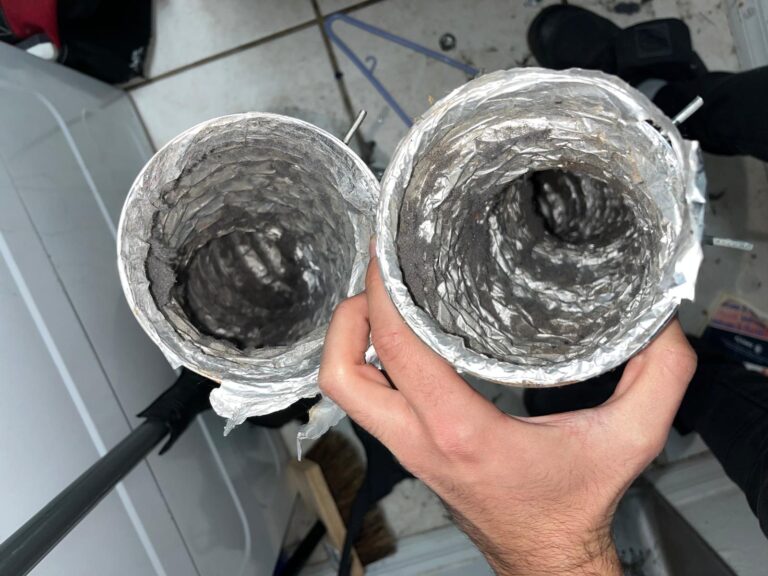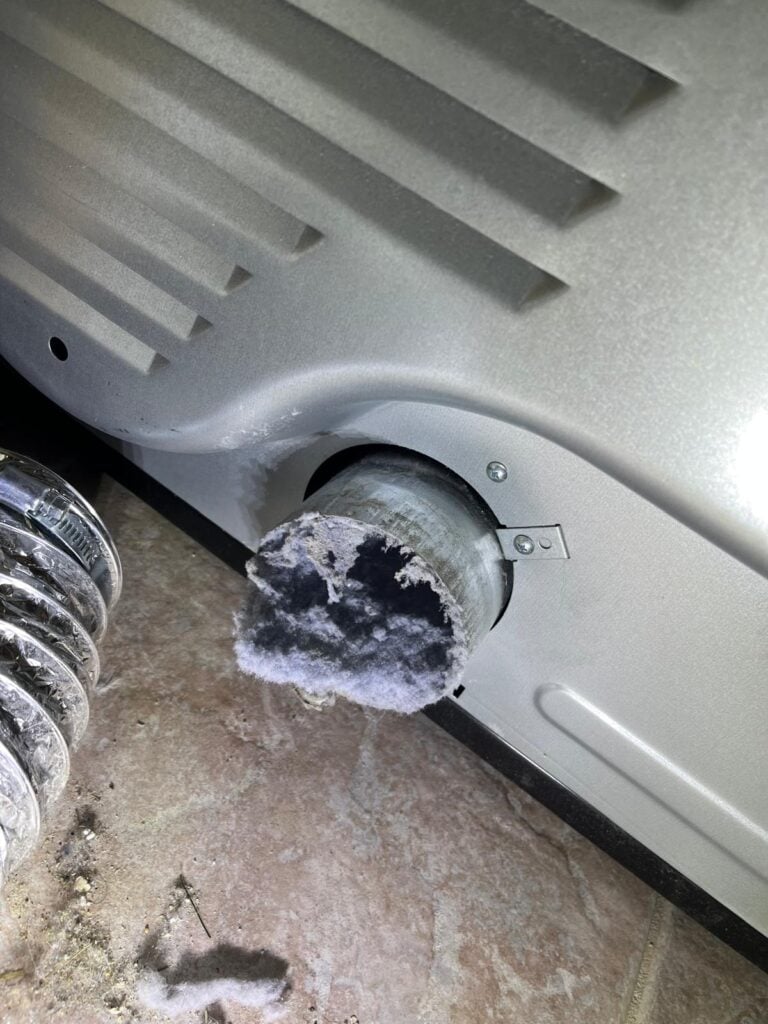
A clogged dryer vent doesn’t announce itself with a flashing light. It announces itself the day a load of laundry takes three cycles to dry, or the day a small spark in a lint pile turns into a fire. Knowing the warning signs — and acting on them — is what keeps that day from happening.
Below are the seven warning signs we see most often across Treasure Coast homes, what each one actually means, and what to do next.
1. Clothes take more than one cycle to dry
This is the single most common complaint — and the clearest sign of restricted vent airflow. A dryer works by heating air and exhausting humid air out. When the vent is clogged with lint, the humid air can’t leave, so the dryer just sits there blowing warm wet air through the drum.
If a load that used to take 45 minutes now takes 90, the vent (not the dryer) is the problem 9 times out of 10.
2. The outside of the dryer is hot to touch
A working dryer should be warm. A dryer hot enough that you can’t comfortably leave your hand on the side is overheating — which is the failure mode that precedes a dryer fire. The internal high-limit thermostat will keep tripping, the heating element will eventually fail, and worst case the lint inside ignites.
3. Burning smell when the dryer is running
This is the one you don’t ignore for another day. The smell is lint scorching on the heating element — a precursor to ignition. Stop the dryer immediately, unplug it from the wall, and call a professional dryer vent cleaner.
Stop using the dryer until a professional has cleared and inspected the full vent line. SunDuct offers same-day dryer vent cleaning across the Treasure Coast.
Call 772-577-2765 now.4. The laundry room feels humid or warm
That moisture should be venting outside. If the laundry room itself is muggy whenever the dryer runs, the humid exhaust is escaping into the home through a disconnected, kinked, or restricted vent line. Long-term that causes drywall damage and a perfect breeding ground for mold.
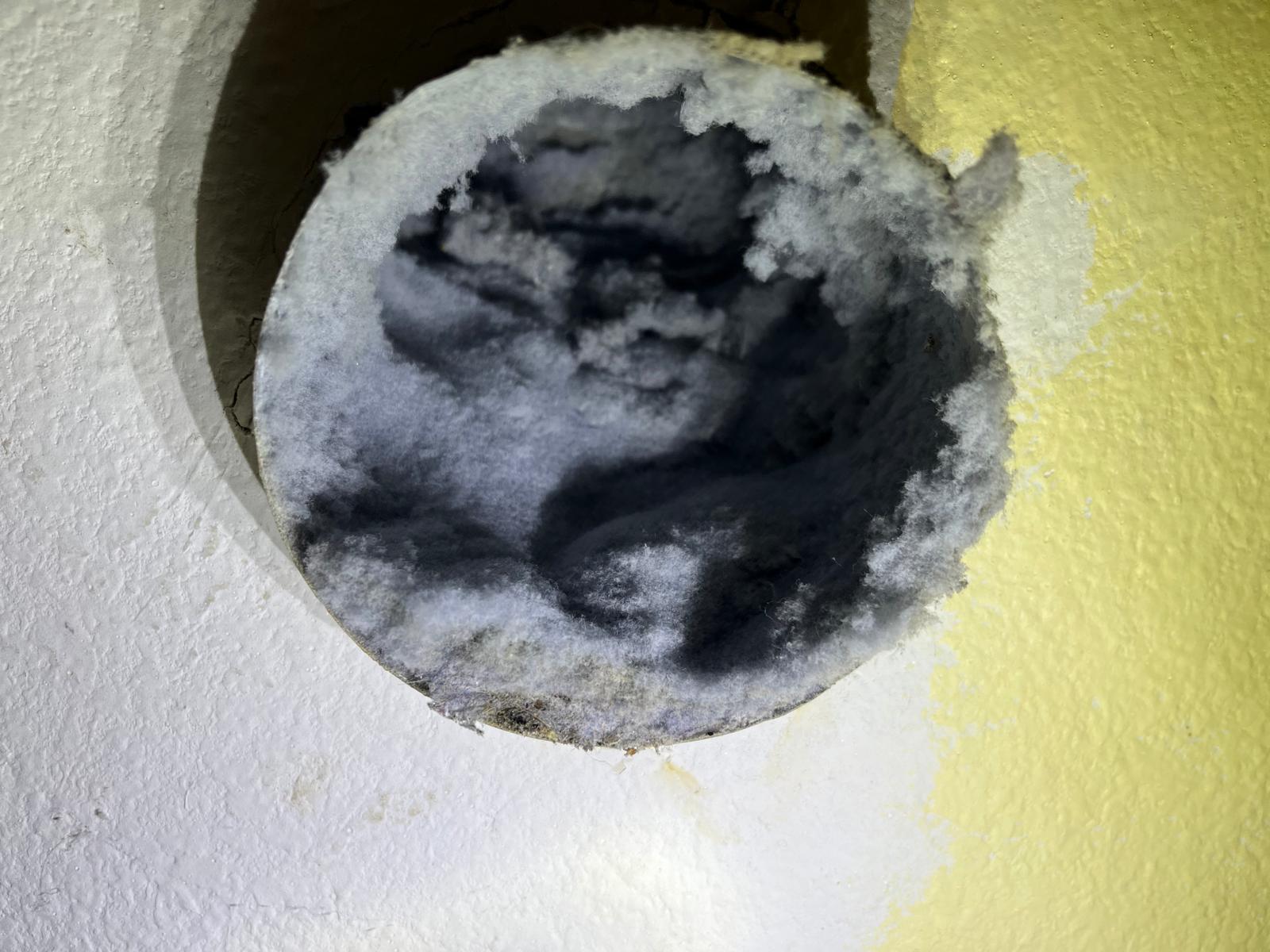
5. Lint visible at the outside vent hood, especially in clumps
Step outside while the dryer is running. The vent hood should be open and pushing warm air out. If you see clumps of lint hanging from the hood, blowing onto the wall around it, or — worse — the flapper barely opening, the line behind it is heavily restricted.
6. Dryer shuts off mid-cycle
Modern dryers have a high-limit thermostat that kills power when internal temps go too high. A clogged vent traps heat, the thermostat trips, and the cycle ends 20 minutes in. You’ll often think the dryer is broken — usually it’s actually doing its job, protecting you from a runaway heat condition caused by the vent.
7. Visible lint inside the dryer drum or behind the unit
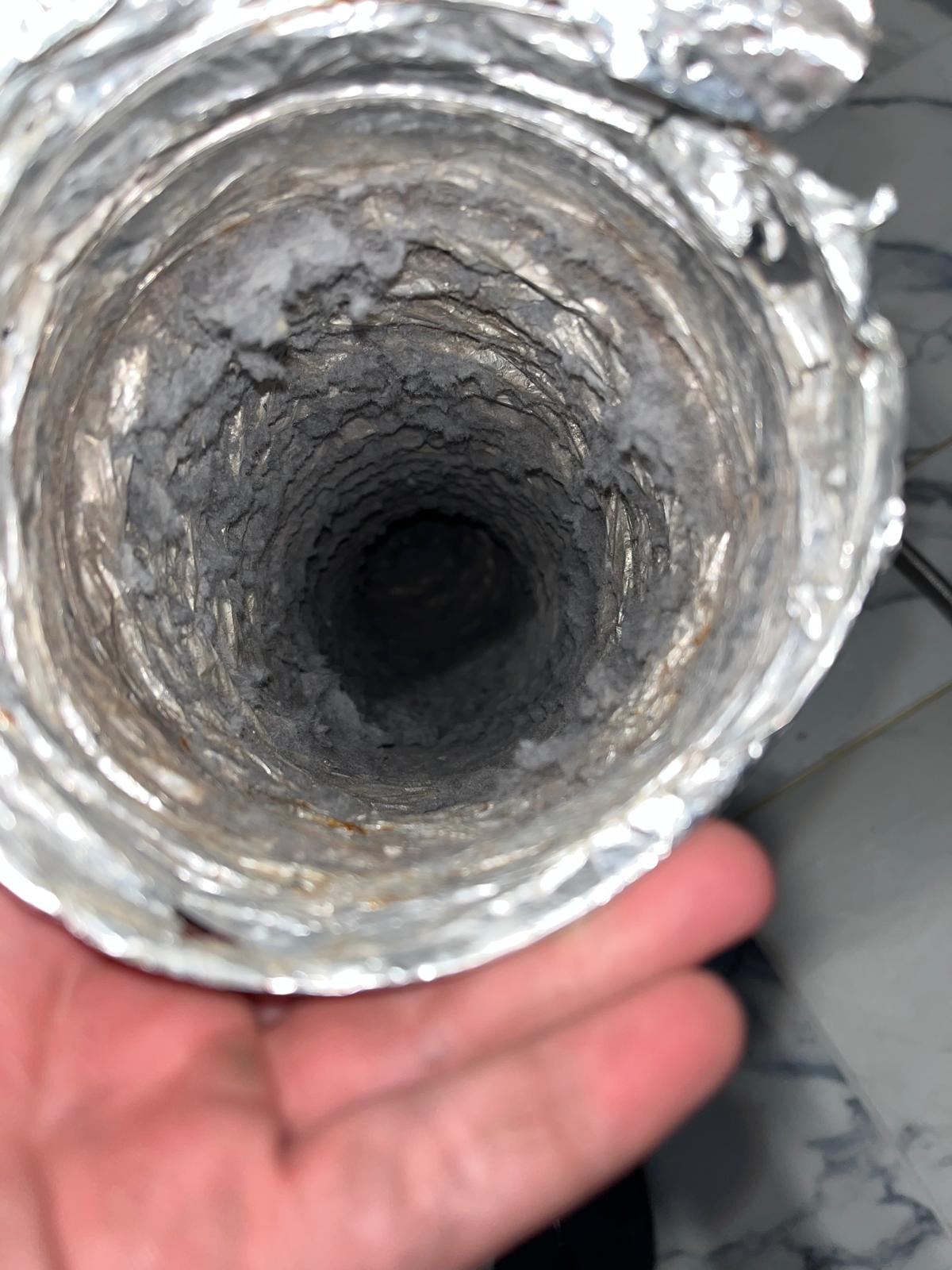
Pull the dryer out and look behind it. If there’s lint piling up on the floor or coating the back of the dryer, the transition hose has either come loose or is so restricted that it’s leaking lint backwards into the room. Both situations are fire risk.
Why this matters: the dryer fire numbers
From the US Fire Administration: dryers are involved in roughly 2,900 residential structure fires per year, with annual losses of around $35 million in property damage. The leading cause? Failure to clean — specifically lint buildup in the dryer vent.
It’s one of the most preventable categories of home fire in the US. A 60-minute professional dryer vent cleaning handles it.
What to do if you’re seeing the warning signs
- Stop using the dryer if you smell burning or it’s extremely hot to the touch.
- Disconnect the transition hose and look inside — if you can see compacted lint, that’s only the tip.
- Don’t try to push a brush through a long vertical roof vent from inside — it gets stuck, makes the problem worse, and usually still doesn’t reach the cap.
- Schedule a professional dryer vent cleaning with someone who’ll do the full line, not just the first 6 feet.
What a real dryer vent cleaning looks like
If you’ve had a “$49 special” that took 15 minutes — that wasn’t a real cleaning. Proper service includes:
- Full disconnect, vacuum, and rotary brush through the entire run from drum to roof cap
- Exterior vent hood removal and cleaning
- Transition hose check and (if needed) replacement
- Airflow test with a manometer to verify proper venting
- Before/after photos of the lint removed
Bottom line
If you’re seeing any one of these seven signs — and especially two or more — the dryer vent needs to be cleared now, not “soon.” Treasure Coast homeowners can call SunDuct at 772-577-2765 or request a free quote. We do same-day appointments across Port St. Lucie, Fort Pierce, Vero Beach and the surrounding area.
Got air-duct or dryer-vent questions?
SunDuct is the Treasure Coast’s local team for honest, NADCA-standard cleaning. Same-day appointments often available.
Frequently Asked Questions
Clogged dryer vents: common questions
Who should I call to clean out my dryer vent?
A dryer vent cleaning company, or an air duct company that does full-line vent work. Not an appliance repair technician, who will usually pull the transition hose behind the dryer and stop there, and not a general handyman with a leaf blower, which mostly relocates the lint. Three questions sort the real ones from the rest: do you brush the whole run all the way to the exterior hood, do you go up on the roof if the vent terminates there, and do you test airflow when you are done. If the answer to any of those is no, you are paying for the first six feet of a twenty-five foot problem. SunDuct does the full run, pulls the exterior hood, and shows you before and after photos.
What does dryer vent cleaning cost in Florida?
SunDuct’s flat rate is $129 for the air duct and dryer vent bundle, which is what most people book because the truck is already at the house and the second job adds very little time. A dryer vent on its own gets quoted when you call, and whatever we quote is confirmed in writing before we come out. Anyone advertising a $49 dryer vent special is selling you about fifteen minutes and a shop vacuum, and the invoice usually lands somewhere very different once the technician is standing in your laundry room. Ask for the price in writing before anyone unloads equipment, from us or from anyone else.
How do I tell whether it is the vent or the dryer itself?
There is a simple test you can run in five minutes. Pull the dryer out, disconnect the transition hose from the wall duct, and run the dryer on a normal heat cycle for a few minutes with the hose venting into the room. Stand clear, and stop if you smell burning. If the exhaust blows out strong and hot with the hose disconnected, the appliance is fine and the restriction is in the ductwork inside your wall or roof. If the airflow is weak even venting straight into the room, the problem is the dryer itself and you want an appliance technician, not us. Either way, check the exterior hood while the dryer runs: the flapper should open fully.
Can a clogged dryer vent make you sick, or is it only a fire risk?
Fire is the headline risk, but it is not the only one. If you have a gas dryer, the vent is also the exhaust path for combustion byproducts including carbon monoxide, and a blocked line can push those back into the house. That is a genuine reason to have a working carbon monoxide alarm near a gas dryer, and to stop using it entirely until the line is clear. With an electric dryer there is no carbon monoxide, but a restricted vent dumps every load’s worth of warm moisture into the laundry room instead of outside, and in a Florida house that moisture ends up in drywall, baseboards and closet walls, where it grows exactly what you would expect.
How long does a dryer vent cleaning take, and do I need to be home?
Under an hour for a standard run in a single-storey home. A long vertical run up through the roof on a two-storey house takes longer, and if we find a bird nest or a collapsed section it takes longer again, but we will tell you that while we are there rather than after. Somebody does need to let us in and be there at the end, because the walkthrough is part of the job: you see the before and after photos, you see what came out of the line, and you hear whether the transition hose or the exterior hood needs replacing. If you cannot be there yourself, a neighbour, tenant or property manager works fine.