How Air Duct Cleaning Works, Step by Step

Air duct cleaning works by loosening the dust stuck inside your duct system and pulling it out under suction, so it is collected instead of blown into your rooms. On our jobs: inspection first, a flat price in writing, HEPA negative air extraction with mechanical agitation at every supply and return, washed registers, and before and after photos.
This guide walks through each step of a SunDuct visit and how to check the work before the technician leaves. Our Frisco, TX office uses the same equipment and the same flat quote in writing. For the Treasure Coast price side, see what our $99 air duct cleaning includes for a single family home of about 2,500 square feet with up to 10 vents.
The steps at a glance
| Step | What happens | Why it matters |
|---|---|---|
| 1. Inspection | The technician inspects the duct system before any work begins | You see what is in the system, and we say so if it does not need cleaning yet |
| 2. Price in writing | The flat rate is confirmed in writing before we start | No per vent charges and no on site upsells |
| 3. Negative air | A HEPA negative air machine puts the system under suction | Loosened debris travels to the machine, not into the room |
| 4. Agitation | Whips and brushes work the supply, return and trunk lines | Suction alone does not release dust stuck to duct walls |
| 5. Registers and boots | Registers removed, washed and reinstalled; the boot behind each vent cleaned out | Vacuuming through a grille misses the boot behind it |
| 6. Air handler and blower | The air handler and blower wheel cleaned as part of the job | That is where dust and moisture collect first |
| 7. Optional antimicrobial | EPA registered antimicrobial fogging after cleaning, only if you choose it | EPA says such products belong after cleaning, if used at all |
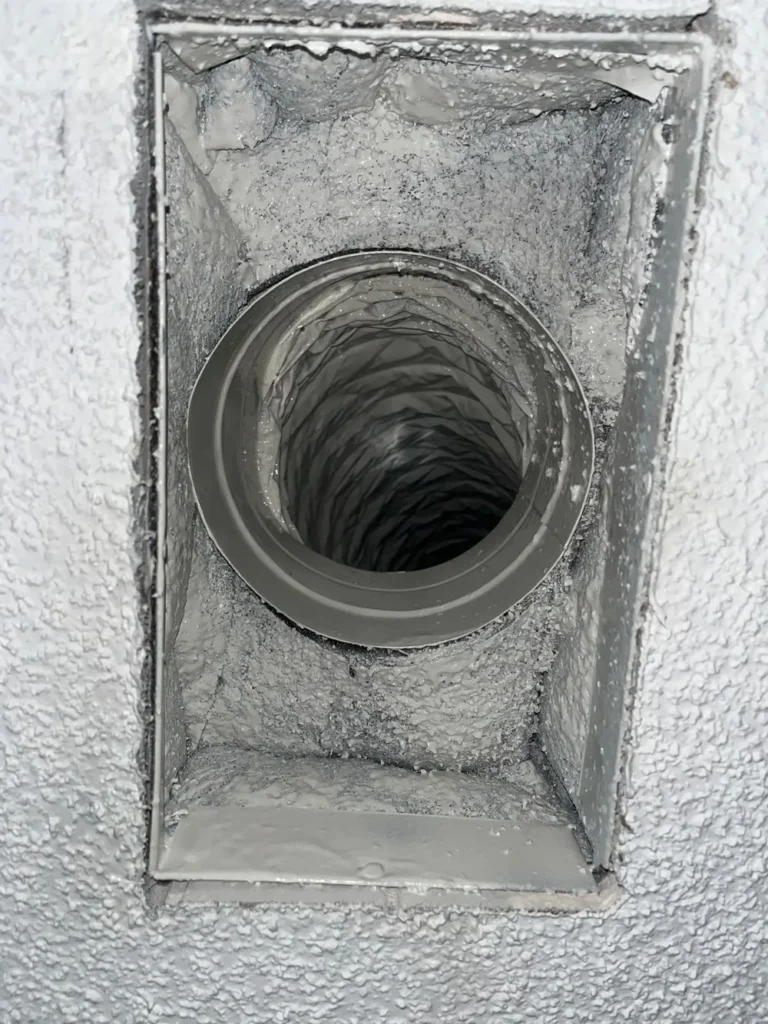
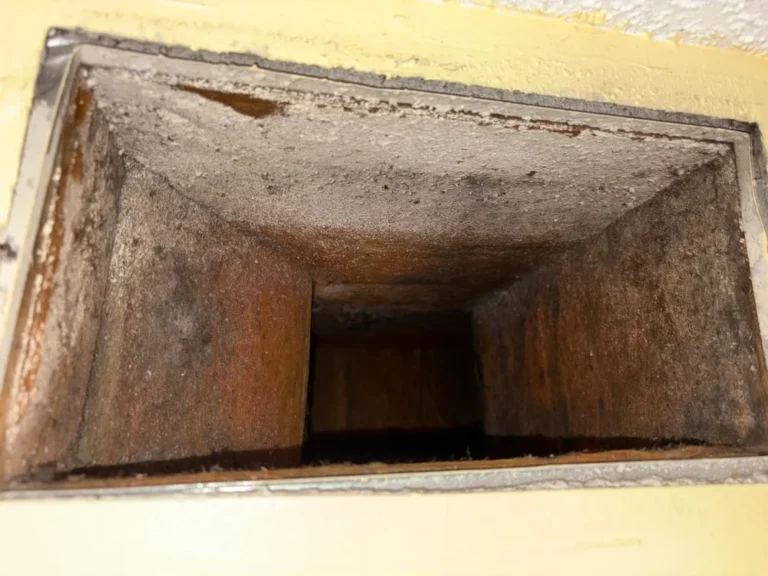
| 8. Photos and walk through | Before and after photos and a walk through with the technician | You see what came out instead of taking our word for it |
Step 1: What happens during the inspection?
Before any work begins, the technician inspects your duct system with you, shows you what they plan to do, and answers questions before any equipment comes off the truck. It is also the moment to ask to see the dust or debris that justifies a cleaning, which is exactly what EPA tells homeowners to ask any provider.
The EPA guide to air duct cleaning also notes that “it is normal for the return registers to get dusty as dust-laden air is pulled through the grate,” and that this alone does not mean the ducts hold heavy deposits. If your ducts do not need cleaning yet, we will tell you.
The inspection is also where damage shows up. If we find a crushed flex run or a return that is pulling attic air, we photograph it and tell you. That repair is HVAC contractor work, and we do not sell repairs.
Step 2: Why is the price confirmed before the work starts?
So the number is settled before work starts, not once the vents are open. We ask about the size of your home and the vent count when you book, then confirm a flat rate in writing before we start, with no per vent charges and no on site upsells. The total does not change without your written agreement.
On the Treasure Coast, air duct cleaning starts from $99 for a single family home of about 2,500 square feet with up to 10 vents; larger homes and second systems are quoted in writing before the visit. In Frisco, every job gets a flat quote in writing before any work starts.
Step 3: How does negative pressure duct cleaning work?
A HEPA negative air machine is connected to the duct system and puts the whole system under suction. With the ducts under negative pressure, dust that gets knocked loose in the next step is drawn toward the machine and captured, rather than pushed out through the registers into your rooms.
That is the difference from a quick blower pass that stirs dust up. EPA warns that “an inadequate vacuum collection system can release more dust, dirt and other contaminants than if you had left the ducts alone.”
Step 4: How are the supply and return lines agitated?
Suction on its own does not release dust that has stuck to duct walls. So while the system is under negative air, the technician works the supply, return and trunk lines with whips and brushes to break the buildup loose, and the vacuum carries it out. EPA describes the same approach: brushing of duct surfaces combined with vacuum cleaning.
The return is part of that work, and in most Treasure Coast homes it is the dirtiest single opening in the house. And if your ducts are fiberglass duct board or are lined inside with fiberglass, EPA says providers should “use only soft-bristled brushes” on them, so it is a fair question to ask any company.
Do duct cleaners go into every room?
Yes. Every supply and return in the home gets cleaned, so the technician needs to reach every register, which means going into every room that has one. We move light items, but please move beds, dressers and sofas away from vents before we arrive, so nothing blocks the work.
Want this done in your home? On the Treasure Coast, call 772-577-2765. In Frisco and nearby towns, call 469-405-6353.
Step 5: How are house vents cleaned?
The supply and return registers are removed, washed and reinstalled, and the boot behind each vent, the metal box that joins the register to the duct, is cleaned out while the cover is off. Vacuuming through a grille that stays screwed in cleans the grille, not the boot behind it.
Step 6: Why are the air handler and blower wheel part of the job?
Because the air handler and blower wheel are where dust and moisture collect first. The blower moves the air through every duct in the house, so cleaning the ducts while leaving it dirty would leave a source of dust in place. We clean the air handler and blower wheel as part of the job, not as an extra.
EPA makes the same point about the whole system: “Failure to clean a component of a contaminated system can result in re-contamination of the entire system, thus negating any potential benefits.” If the system smells musty, see where a musty smell from AC vents comes from.
Step 7: Is antimicrobial fogging part of every cleaning?
No. Antimicrobial fogging is an optional add on, never a required part of the cleaning. If you choose it, an EPA registered antimicrobial is applied after the ducts are cleaned, following its label, and its price is confirmed in writing before any work starts. We offer it as an option, not something we push.
EPA’s guidance is that products like this “should only be applied, if at all, after the system has been properly cleaned of all visible dust or debris.” Ask to see the label first, from us or anyone else. Read more on what air duct sanitizing is and is not.
Step 8: What should the before and after photos show?
The same locations before and after, so you can see what came out instead of taking our word for it. We take before and after photos on every job, and the technician walks you through the work at the end. If a photo shows something cleaning cannot fix, such as a damaged duct, we tell you plainly what it is.
You can see real examples in our air duct cleaning before and after photos from Treasure Coast jobs.
How do you check the job before the technician leaves?
Look for yourself. EPA says “a thorough visual inspection is the best way to verify the cleanliness of your heating and cooling system,” and that all portions of the system should be visibly clean. Its post cleaning consumer checklist gives you specific questions to work through while the technician is still there, including these:
- Is the blower compartment free of visible dust or debris?
- Is the return air plenum free of visible dust or debris?
- Have all registers, grilles and diffusers been firmly reattached to the walls, floors and/or ceilings?
- Are the registers, grilles and diffusers visibly clean?
- Does the system function properly in both the heating and cooling modes after cleaning?
What are the downsides of duct cleaning?
The real downsides come from how it is done and sold. A poor job can make things worse, the equipment is noisy while it runs, and low advertised prices can turn into large invoices. EPA also says duct cleaning “has never been shown to actually prevent health problems,” so we do not sell it as a health fix.
What a cleaning does do is remove what has collected inside the ductwork, so the air moving through the system is not pushing that debris back into the rooms. It does not change how your system is sized or installed. For an honest look at when it is worth paying for, read is air duct cleaning worth it.
Thank you! Your request is in.
We received your details and will call or text you the same day to confirm your appointment.
Need us right now? Call 772-577-2765
Frequently asked questions
Can I stay home during air duct cleaning?
Yes. You do not need to leave while we work. The equipment is noisy while it runs, and at the end the technician walks you through the before and after, with photos of the work. The optional antimicrobial step is different: EPA's consumer checklist advises that, as a precaution, you and your pets leave the premises while it is applied.
Is air duct cleaning in Frisco, TX done the same way?
Yes. As our Frisco page puts it: same team, same equipment and the same flat quote in writing before any work starts. That means inspection first, HEPA negative air extraction with whips and brushes, and a before and after walk through with photos. Call 469-405-6353; the Frisco office is open daily 9 AM to 5 PM.
Does air duct cleaning include duct repair or mold removal?
No. We are a cleaning company, not an installer. If we find a crushed or disconnected duct, we photograph it and tell you so a licensed HVAC contractor can repair it, and we do not perform mold remediation. If a system has a genuine moisture problem, cleaning alone is not the answer, and we will say so.
Book a cleaning
On the Treasure Coast we clean air ducts across St. Lucie, Martin and Indian River counties: call 772-577-2765 or see our air duct cleaning services. In Frisco, Plano, McKinney, Prosper, Little Elm, The Colony and Allen, call 469-405-6353 or see air duct cleaning in Frisco, TX. Either way, the price is confirmed in writing before we start.